Table of Contents
- Introduction
- Understanding Artificial Intelligence in Healthcare
- Why AI is Becoming Essential in Modern Medicine
- How AI is Transforming Healthcare
- AI in Disease Diagnosis
- AI in Medical Imaging
- AI in Personalized Medicine
- AI in Drug Discovery
- AI in Virtual Healthcare and Telemedicine
- Positive Impact of AI on Health Quality
- Negative Impact of AI on Health Quality
- AI in Disease Management
- AI in Mental Healthcare
- AI and Wearable Health Technology
- Ethical Challenges and Privacy Concerns
- Future Trends of AI in Healthcare (2026–2035)
- Challenges Facing AI in Medicine
- The Balance Between Human Doctors and AI
- Frequently Asked Questions (FAQs)
- Conclusion
Introduction
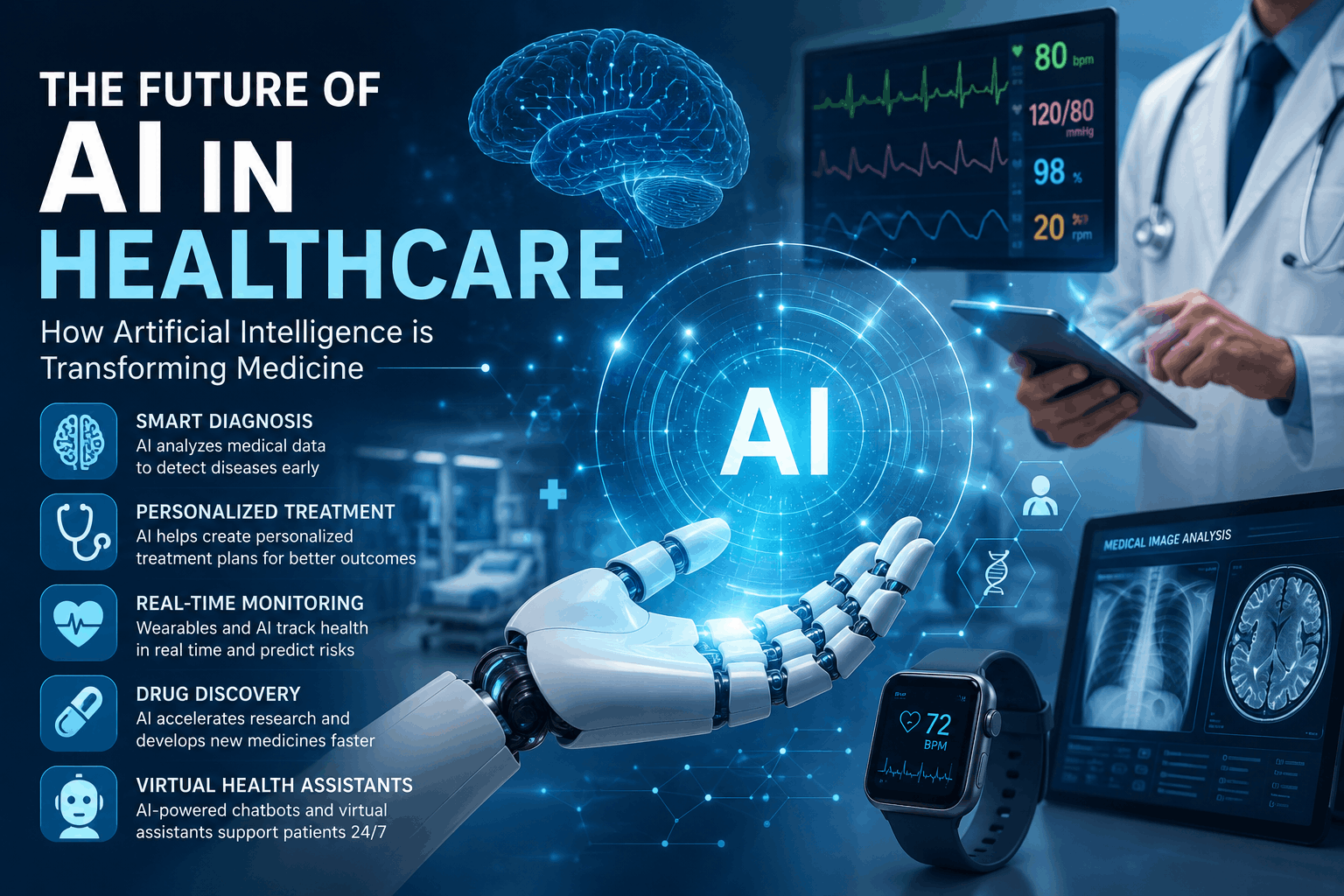
Healthcare is changing faster than ever before. Over the last decade, technological innovation has transformed how doctors diagnose diseases, how hospitals manage patients, and how medicines are developed. Among all these technological advances, one innovation stands out as a major force shaping the future of medicine: Artificial Intelligence (AI).

The future of AI in healthcare promises enormous benefits. Faster diagnoses, better treatment plans, reduced medical errors, improved patient care, and increased healthcare accessibility are just a few examples of how AI can enhance health quality. Hospitals and healthcare providers are increasingly adopting AI-powered systems to improve efficiency and provide better outcomes for patients.
Artificial Intelligence is no longer a futuristic concept found only in science fiction movies. Today, AI is actively helping doctors identify diseases, assisting surgeons during operations, improving medical research, and even supporting patients in managing chronic illnesses. From cancer detection to personalized treatments, AI is revolutionizing healthcare in ways that were unimaginable just a few years ago.
However, while AI brings exciting possibilities, it also raises important concerns. Can machines replace doctors? What happens to patient privacy? Could AI make healthcare less human? Are there risks of bias, inaccurate diagnosis, or overdependence on technology?
These questions are becoming increasingly important as healthcare systems around the world continue integrating artificial intelligence into everyday medical practice.
This article explores the future of AI in healthcare, examining both its positive and negative impacts on health quality. We will discuss how AI is transforming medicine, improving patient outcomes, and creating smarter healthcare systems—while also addressing the ethical concerns and limitations that society must carefully manage.
Whether you are a student, healthcare professional, technology enthusiast, or simply someone curious about the future of medicine, understanding the role of artificial intelligence in healthcare is essential because its impact will influence nearly everyone’s life in the coming decades.
Understanding Artificial Intelligence in Healthcare
Artificial Intelligence refers to computer systems designed to perform tasks that normally require human intelligence. These tasks include learning from data, identifying patterns, solving problems, making predictions, and even understanding language.
In healthcare, AI involves using advanced algorithms and machine learning systems to analyze medical information and help healthcare professionals make better decisions.
Simply put, AI in healthcare means using smart technology to improve diagnosis, treatment, disease prevention, patient monitoring, and healthcare management.
AI systems can process huge amounts of medical data much faster than humans. For example, a doctor may review hundreds of patient records in a week, while an AI system can analyze thousands of medical images or patient histories in just minutes.
This ability allows healthcare providers to detect diseases earlier, predict risks, and recommend better treatments.
Major Types of AI Used in Healthcare
1. Machine Learning
Machine learning allows computers to learn from medical data without being specifically programmed.
For example, an AI system trained on thousands of X-rays can learn to identify signs of pneumonia, fractures, or tumors.
The more data the system receives, the more accurate it becomes.
2. Deep Learning
Deep learning is a more advanced form of machine learning that mimics how the human brain processes information.
It is especially useful in:
- Medical imaging
- Cancer detection
- Brain scans
- Skin disease diagnosis
- Eye disease screening
Deep learning systems can often recognize patterns invisible to the human eye.
3. Natural Language Processing (NLP)
Natural Language Processing helps computers understand human language.
In healthcare, NLP can:
- Analyze doctor notes
- Process medical records
- Summarize patient information
- Assist medical research
It reduces paperwork and improves efficiency.
4. Robotics and Automation
AI-powered robots are increasingly being used in surgery and patient care.
These robots can assist surgeons with highly precise procedures, reducing complications and recovery times.
Although robots do not replace doctors, they improve surgical precision significantly.
Why AI is Becoming Essential in Modern Medicine
The healthcare industry faces many challenges:
- Increasing patient populations
- Rising healthcare costs
- Doctor shortages
- Chronic disease growth
- Human medical errors
- Delayed diagnosis
Artificial intelligence helps solve many of these problems.
Healthcare systems generate enormous amounts of information daily, including:
- Medical records
- Laboratory reports
- Imaging scans
- Treatment histories
- Medication records
- Genetic data
Doctors alone cannot analyze this massive amount of information quickly.
AI acts as a support system by processing data efficiently and identifying patterns that might otherwise go unnoticed.
For example, AI can identify patients at high risk of heart disease long before symptoms become severe.
This early intervention may save lives.
Additionally, many countries face physician shortages, especially in rural areas. AI-powered telemedicine and digital diagnostic systems can help improve access to healthcare services where medical professionals are limited.
As healthcare becomes more data-driven, AI is moving from being optional technology to becoming an essential part of medical systems.
How AI is Transforming Healthcare
Artificial intelligence is changing healthcare in several powerful ways.
Let us explore some of the most important areas.
1. AI in Disease Diagnosis
One of the most impactful applications of AI is disease diagnosis.
Traditionally, doctors rely on experience, medical tests, and observations to diagnose illnesses. While highly skilled professionals are effective, human limitations such as fatigue, time pressure, and information overload can sometimes delay or complicate diagnosis.
AI helps reduce these challenges.
By analyzing medical data quickly, AI systems can detect diseases earlier and more accurately.
Early Disease Detection
AI can identify diseases before symptoms become severe.
Examples include:
Cancer Detection
AI-powered systems can analyze medical scans and identify tiny abnormalities linked to cancer.
In some situations, AI helps detect:
- Breast cancer
- Lung cancer
- Skin cancer
- Prostate cancer
Earlier detection means earlier treatment, which improves survival rates.
Heart Disease Prediction
AI can evaluate patient history, blood pressure, cholesterol levels, and lifestyle habits to predict cardiovascular risks.
Doctors can then recommend preventive treatment before serious complications occur.
Diabetes Management
Artificial intelligence can monitor glucose patterns and predict dangerous blood sugar fluctuations.
This helps patients manage diabetes more effectively.
Neurological Disorders
AI is also helping identify diseases such as:
- Alzheimer’s disease
- Parkinson’s disease
- Stroke risk
Early prediction allows doctors to begin treatment sooner.
Positive Impact on Health Quality
The positive effects include:
- Faster diagnosis
- Earlier disease prevention
- Better treatment outcomes
- Reduced medical errors
- Improved patient survival rates
This can significantly improve healthcare quality for millions of people.
Negative Impact on Health Quality
However, relying too much on AI diagnosis can create problems.
Possible risks include:
False Diagnoses
AI systems are not perfect.
If trained using poor-quality data, AI may make inaccurate predictions or diagnostic errors.
A wrong diagnosis can delay treatment and increase health risks.
Reduced Human Judgment
Doctors may become too dependent on technology instead of clinical experience.
Human intuition still plays an important role in medicine.
Healthcare Inequality
Advanced AI diagnostic systems may not be equally available everywhere, especially in developing countries.
This could increase healthcare gaps between wealthy and underserved populations.
2. AI in Medical Imaging
Medical imaging is one of the fastest-growing areas of AI adoption.
Doctors use imaging technologies such as:
- X-rays
- MRI scans
- CT scans
- Ultrasounds
Analyzing thousands of images manually takes time.
AI helps doctors interpret scans faster and more accurately.
Examples of AI in Medical Imaging
AI can help identify:
- Brain tumors
- Internal bleeding
- Lung infections
- Bone fractures
- Heart abnormalities
Radiologists increasingly use AI as a second opinion tool.
Instead of replacing specialists, AI helps improve confidence and reduce mistakes.
Positive Effects on Health Quality
Benefits include:
- Faster medical reports
- Reduced diagnostic delays
- Improved treatment planning
- More accurate disease detection
Patients can receive care sooner.
Negative Effects on Health Quality
Potential drawbacks include:
- Overdependence on software
- Technical failures
- Expensive implementation costs
- Risk of data errors
If healthcare systems rely entirely on machines, unexpected software issues could disrupt patient care.
3. AI in Personalized Medicine
Every patient is different.
Traditional healthcare often follows a “one-size-fits-all” treatment approach.
AI is helping move medicine toward personalized care.
Personalized medicine uses patient-specific information such as:
- Genetics
- Lifestyle
- Medical history
- Environmental factors
AI analyzes this data to recommend customized treatments.
For example, cancer treatment may vary depending on genetic differences between patients.
Instead of giving everyone the same treatment, doctors can select therapies most likely to work for a specific person.
This improves effectiveness while reducing side effects.
Benefits to Health Quality
- Better treatment outcomes
- Fewer medication side effects
- Improved patient satisfaction
- More precise AI in healthcare
Risks and Challenges
However, personalized medicine raises concerns about:
- Genetic privacy
- Data misuse
- High costs
- Unequal accessibility
Some advanced treatments may only be available to wealthier patients.
4. AI in Drug Discovery
Developing medicines traditionally takes many years and billions of dollars.
AI is speeding up drug discovery.
Researchers use AI to:
- Analyze chemical compounds
- Predict drug effectiveness
- Identify treatment targets
This can dramatically reduce the time needed to create new medicines.
During global health emergencies, faster drug development may save millions of lives.
Positive Impact
- Faster medical breakthroughs
- Reduced costs in research
- Better treatment options
Negative Impact
- Heavy reliance on algorithms
- Regulatory uncertainty
- Ethical concerns over testing
5. AI in Telemedicine and Virtual Healthcare
Virtual AI in healthcare is growing rapidly.
AI-powered telemedicine platforms allow patients to consult healthcare professionals remotely.
This is especially helpful for:
- Rural populations
- Elderly patients
- Disabled individuals
- Busy professionals
AI chatbots can help:
- Schedule appointments
- Provide symptom guidance
- Monitor medications
- Answer health questions
Telemedicine improves healthcare access significantly.
However, there are concerns about:
- Misdiagnosis without physical examination
- Privacy risks
- Reduced human interaction
6. AI in Disease Management: Revolutionizing Long-Term Healthcare
One of the most significant ways artificial intelligence is transforming medicine is through disease management, particularly for chronic and long-term illnesses. Traditional healthcare systems often focus on treating diseases after symptoms become severe. However, AI is shifting medicine toward continuous monitoring, early intervention, and preventive healthcare.
Millions of people worldwide suffer from chronic conditions such as diabetes, heart disease, asthma, hypertension, obesity, arthritis, and chronic respiratory illnesses. These conditions require constant management rather than one-time treatment. Managing them manually can be difficult for both patients and healthcare professionals.
Artificial intelligence offers smarter solutions by helping doctors monitor patients continuously and allowing individuals to manage their own health more effectively.
How AI Improves Chronic Disease Management
AI uses large amounts of patient data to identify trends, predict health risks, and recommend interventions before serious complications develop.
Instead of reacting to illness after it worsens, AI focuses on predictive healthcare, meaning preventing problems before they occur.
AI in Diabetes Management
Diabetes is one of the most common chronic diseases globally. Managing diabetes requires constant blood sugar monitoring, diet control, medication management, and lifestyle adjustments.
AI-powered systems help diabetic patients by:
- Tracking glucose levels in real time
- Predicting dangerous blood sugar spikes
- Sending alerts before emergencies occur
- Suggesting healthier dietary adjustments
- Helping doctors optimize insulin dosage
Smart glucose monitors connected to mobile applications can analyze patterns and predict when blood sugar levels may become dangerous.
For example, if a patient consistently experiences blood sugar fluctuations at certain times of day, AI systems can detect these trends and suggest preventive actions.
Positive Impact on Health Quality
The positive effects are substantial:
Better Disease Control
Patients receive continuous monitoring instead of waiting for symptoms to become serious.
This reduces hospital visits and improves quality of life.
Early Prevention of Complications
AI can detect warning signs before dangerous complications arise.
For diabetic patients, this may reduce risks such as:
- Kidney disease
- Vision loss
- Nerve damage
- Heart complications
Improved Patient Independence
Patients gain more control over their own health.
Instead of relying completely on doctors, individuals can make informed lifestyle decisions daily.
Negative Impact on Health Quality
Despite benefits, challenges remain.
Technology Dependence
Some patients may become overly dependent on AI recommendations and ignore medical advice from healthcare professionals.
AI should support doctors—not replace medical expertise.
Data Accuracy Issues
If monitoring devices produce incorrect data, AI recommendations may become unreliable.
False alerts can create unnecessary stress or dangerous misunderstandings.
Accessibility Problems
Many advanced AI systems are expensive.
Low-income communities may struggle to access these technologies, widening healthcare inequality.
AI in Cardiovascular Disease Management
Heart disease remains one of the leading causes of death worldwide.
AI is playing a major role in helping doctors predict cardiovascular risks.
Artificial intelligence analyzes factors such as:
- Blood pressure
- Cholesterol levels
- Heart rate patterns
- Lifestyle behaviors
- Medical history
- Family risk factors
Through predictive analytics, AI can estimate a person’s likelihood of developing heart disease years before symptoms appear.
This gives AI in healthcare providers an opportunity to recommend preventive changes.
For example:
A patient with unhealthy sleep patterns, high cholesterol, and elevated blood pressure may receive personalized recommendations through AI-powered systems encouraging:
- Better nutrition
- Exercise plans
- Medication adjustments
- Stress reduction techniques
Health Quality Improvements
AI can improve heart health by:
- Detecting irregular heart rhythms
- Predicting strokes
- Preventing heart attacks
- Improving treatment personalization
Early intervention often saves lives.
Potential Risks
However, excessive dependence on predictive algorithms can sometimes lead to:
- Misclassification of patients
- Unnecessary anxiety
- Overmedicalization
A person wrongly identified as high-risk may experience emotional stress or unnecessary treatments.
AI in Cancer Care and Disease Monitoring
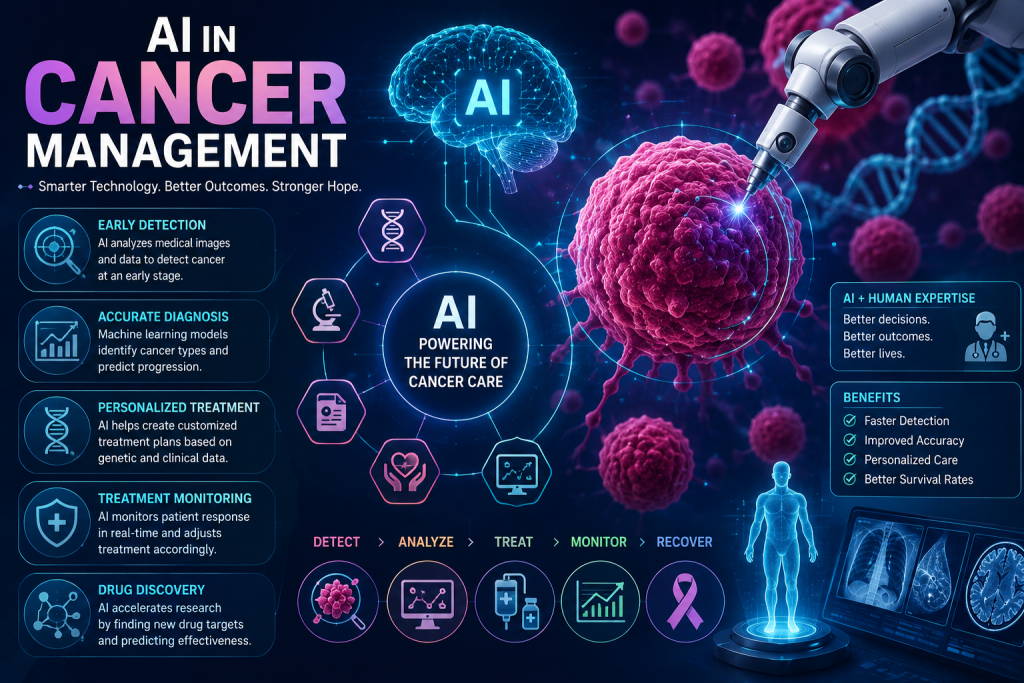
Cancer treatment is becoming increasingly personalized thanks to AI.
Traditionally, cancer management relied heavily on generalized treatment plans. However, cancer behaves differently in different patients.
AI helps doctors analyze:
- Genetic information
- Tumor behavior
- Patient treatment history
- Medication responses
This helps physicians design customized treatment strategies.
AI can also monitor cancer progression more effectively than manual systems.
Real-Time Monitoring
Instead of relying only on periodic checkups, AI systems can continuously evaluate patient responses to treatment.
Doctors may quickly adjust medications if treatment becomes ineffective.
Improved Survival Rates
Early detection and personalized treatment significantly improve survival chances.
AI may help identify cancer at Stage 1 instead of Stage 3 or 4, dramatically increasing treatment success.
Challenges
However, AI cancer systems still face problems including:
- High implementation costs
- Limited accessibility
- Privacy concerns related to genetic information
7. AI in Mental Healthcare: A New Era of Emotional Well-Being
Mental health disorders are increasing worldwide.
Conditions such as:
- Anxiety
- Depression
- Stress-related disorders
- Post-traumatic stress disorder (PTSD)
- Bipolar disorder
affect millions of people.
Unfortunately, mental AI in healthcare systems often face shortages of trained professionals.
Artificial intelligence is helping bridge this gap.
AI-powered mental health tools can assist patients through:
- Emotional monitoring
- Behavioral analysis
- Virtual therapy support
- Mental wellness tracking
AI Chatbots for Mental Health
Mental health chatbots are becoming increasingly popular.
These AI systems provide emotional support through conversations and coping exercises.
They can:
- Encourage positive behaviors
- Offer stress management techniques
- Track emotional changes
- Suggest relaxation exercises
Some platforms even analyze speech patterns or typing behavior to identify signs of emotional distress.
For example:
Changes in communication habits may signal depression or anxiety.
AI systems may encourage users to seek professional help before symptoms worsen.
Positive Effects on Health Quality
Increased Accessibility
Many people avoid therapy due to:
- Cost
- Social stigma
- Distance from healthcare providers
AI tools provide support anytime, anywhere.
Early Mental Health Detection
Artificial intelligence may recognize warning signs earlier than traditional systems.
This allows patients to receive help sooner.
Reduced Waiting Times
Mental healthcare services often have long waiting lists.
AI tools provide immediate assistance while patients wait for professional care.
Negative Effects on Health Quality
However, mental healthcare requires human understanding.
AI limitations include:
Lack of Emotional Intelligence
Machines cannot fully understand human emotions.
A chatbot cannot replace empathy, emotional connection, or professional therapy.
Risk of Misinterpretation
AI may misunderstand emotions or provide inappropriate responses.
Mental health treatment is highly sensitive and requires careful judgment.
Privacy Concerns
Mental health information is deeply personal.
If patient data becomes exposed, individuals may experience serious emotional or social consequences.
8. AI and Wearable Health Technology
Wearable technology is one of the fastest-growing areas in AI in healthcare.
Devices such as:
- Smartwatches
- Fitness trackers
- Smart rings
- Health-monitoring patches
are becoming increasingly intelligent due to AI.
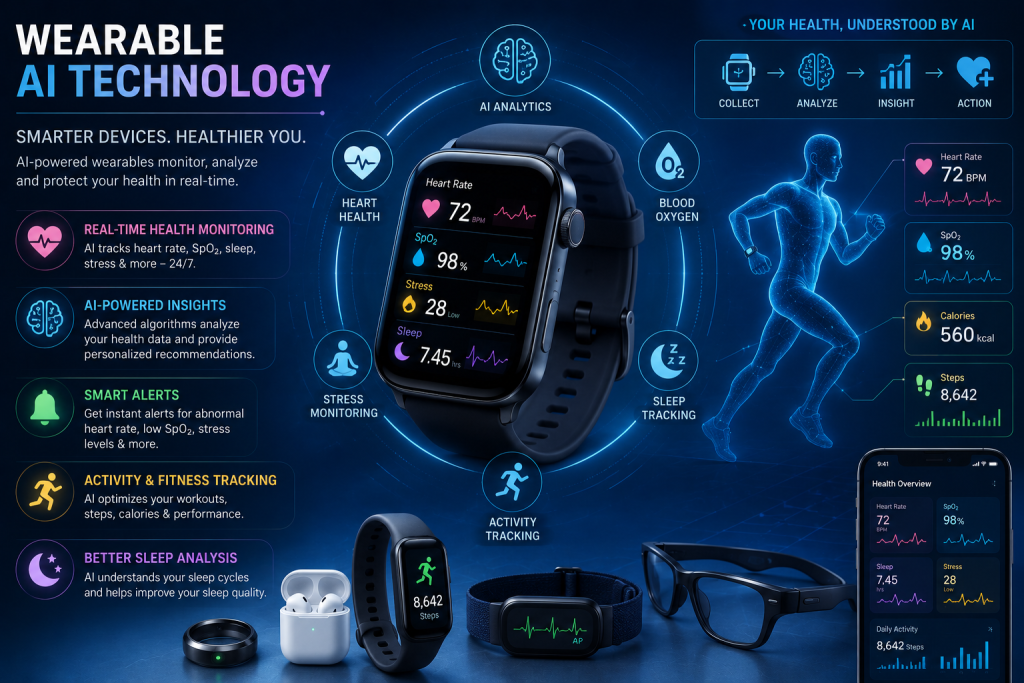
These devices collect health information such as:
- Heart rate
- Sleep quality
- Physical activity
- Oxygen levels
- Blood pressure
- Stress indicators
AI analyzes this data to provide health recommendations.
Real-Time Health Monitoring
Unlike traditional medicine, wearable technology allows continuous health tracking.
Instead of visiting a doctor after symptoms develop, individuals can monitor their health daily.
For example:
A smartwatch may detect an irregular heartbeat and notify the user before serious heart complications occur.
This represents a major shift toward preventive AI in healthcare.
Benefits for Health Quality
Encourages Healthier Lifestyle Choices
People become more aware of:
- Exercise habits
- Sleep quality
- Nutrition
- Physical activity
This awareness often improves overall health.
Faster Emergency Detection
Some AI-powered devices can detect:
- Falls in elderly patients
- Heart irregularities
- Breathing issues
Emergency alerts may save lives.
Better Long-Term Health Tracking
Doctors can analyze patient health trends over time instead of relying only on short clinic visits.
Negative Effects on Health Quality
Despite benefits, wearable health technology has limitations.
Health Anxiety
Constant monitoring may create unnecessary fear.
Some users become obsessed with tracking health statistics.
This can increase stress levels.
Inaccurate Readings
Wearable devices are not always medically perfect.
Incorrect measurements may lead to panic or false reassurance.
Privacy and Security Risks
Health devices collect enormous amounts of personal data.
Cybersecurity breaches may expose sensitive information.
9. Positive Impact of AI on Health Quality (Detailed Analysis)
Artificial intelligence has the potential to dramatically improve global health quality.
Below are the most important advantages.
1. Faster Diagnosis
AI reduces diagnosis time significantly.
Faster diagnosis means:
- Earlier treatment
- Better recovery chances
- Lower mortality rates
2. Reduced Medical Errors
Human mistakes happen due to fatigue, stress, or information overload.
AI systems can help reduce medication errors and missed diagnoses.
3. Improved Accessibility
Remote healthcare becomes easier through AI-powered telemedicine.
People in underserved regions may receive better care.
4. Better Personalized Treatment
Every patient receives care tailored to their needs.
This improves outcomes and reduces side effects.
5. Lower Healthcare Costs
Early prevention and automation may reduce expensive hospitalizations.
Healthcare systems can become more efficient.
6. Stronger Preventive AI in Healthcare
Instead of only treating disease, AI predicts risks before illness develops.
This may create healthier populations overall.
10. Negative Impact of AI on Health Quality: Risks, Concerns, and Challenges
Although artificial intelligence has tremendous potential to improve healthcare, it is equally important to understand the possible negative consequences. Every major technological advancement brings challenges, and AI in healthcare is no exception.
While AI may increase efficiency and accuracy, overdependence on technology, privacy risks, ethical concerns, and unequal healthcare access could negatively affect overall health quality if not managed properly.
To create a balanced healthcare future, governments, healthcare providers, and technology developers must carefully address these concerns.
1. Overdependence on Technology
One of the biggest concerns surrounding AI in healthcare is overdependence on machines.
Doctors possess years of medical training, clinical judgment, emotional understanding, and practical experience that technology cannot fully replace.
If healthcare systems become too dependent on AI, there is a risk that human expertise may slowly decline.
For example:
A doctor may begin relying too heavily on AI-generated recommendations without critically analyzing the patient’s unique situation.
This creates potential risks because no algorithm can fully understand every human condition.
Why Human Judgment Still Matters
Medicine is not only based on scientific data.
Doctors consider:
- Emotional condition
- Family history
- Lifestyle habits
- Personal experiences
- Psychological factors
- Patient preferences
AI mainly analyzes patterns and data.
However, healthcare decisions often require empathy, intuition, and ethical reasoning.
Possible Negative Effects on Health Quality
Overdependence may lead to:
- Reduced clinical thinking among doctors
- Delayed recognition of AI errors
- Less personalized patient care
- Increased risk of medical mistakes
Healthcare quality could decline if technology replaces professional judgment instead of supporting it.
2. Misdiagnosis and AI Errors
Artificial intelligence is powerful, but it is not perfect.
AI systems learn from medical data.
If the training data is incomplete, biased, or inaccurate, the system may produce incorrect recommendations.
This issue is often called algorithmic bias.
How AI Errors Happen
AI can fail due to:
- Poor-quality training data
- Limited patient diversity in datasets
- Technical bugs
- Missing medical information
For example:
If an AI system is trained mostly on data from one ethnic group, it may perform poorly for patients from different populations.
This can create dangerous inequalities in AI in healthcare.
Consequences of Incorrect Diagnosis
Wrong AI predictions may result in:
- Delayed treatment
- Wrong medication
- Unnecessary procedures
- Increased patient anxiety
- Life-threatening complications
Imagine a system incorrectly identifying cancer as harmless.
A delayed diagnosis could severely affect patient survival.
Similarly, false positive diagnoses may create emotional stress and unnecessary medical interventions.
Maintaining Safety
To reduce risks:
- Doctors should verify AI recommendations
- Healthcare systems need constant monitoring
- Medical algorithms must be regularly updated
AI should function as a medical assistant, not an independent decision-maker.
3. Loss of Human Interaction in Healthcare
Healthcare is deeply personal.
Patients often need emotional support, reassurance, and empathy—especially during serious illnesses.
One criticism of AI in healthcare is that it may reduce human connection.
Why Human Care Matters
Patients value:
- Emotional understanding
- Compassion
- Listening
- Personal communication
Machines cannot replicate genuine empathy.
A patient receiving a cancer diagnosis, for example, needs emotional support that no chatbot or machine can truly provide.
Risk of Impersonal Healthcare
As automation increases, healthcare may feel:
- More robotic
- Less compassionate
- Emotionally disconnected
This could negatively affect patient satisfaction and emotional well-being.
Healthcare quality is not only about treatment outcomes but also about patient experience.
4. Healthcare Inequality and Accessibility Gaps
AI in healthcare systems are often expensive.
Advanced technologies require:
- Expensive software
- High-quality infrastructure
- Trained professionals
- Internet access
This creates a major problem.
Developed countries may benefit greatly from AI, while lower-income regions struggle to access advanced healthcare technologies.
Unequal Healthcare Distribution
Some populations may gain access to:
- Advanced diagnostics
- Personalized treatment
- Continuous monitoring
While others may receive limited traditional care.
This could widen global health disparities.
Impact on Health Quality
Healthcare quality may improve dramatically for wealthy communities while remaining poor for underserved populations.
This creates an unfair healthcare future.
To prevent inequality, governments must ensure affordable access to technological AI in healthcare innovations.
5. Privacy and Data Security Risks
Healthcare data is among the most sensitive forms of personal information.
AI systems require enormous amounts of patient data to function effectively.
This includes:
- Medical records
- Genetic information
- Medication history
- Mental health information
- Lifestyle data
Protecting this information is a serious challenge.
Risk of Cyberattacks
Hospitals increasingly face cybersecurity threats.
Hackers may target healthcare systems to steal patient information.
An AI in healthcare data breach may expose:
- Personal medical conditions
- Financial information
- Insurance records
This could lead to identity theft or discrimination.
Ethical Concerns About Data Usage
Questions arise such as:
- Who owns patient data?
- How much information should companies access?
- Can data be sold commercially?
Without proper regulations, patient trust may decrease.
Negative Effects on Health Quality
Privacy concerns may discourage patients from seeking care or sharing honest information with healthcare providers.
Incomplete information may reduce treatment quality.
11. Ethical Concerns of AI in Healthcare
The rise of AI in medicine introduces complex ethical questions.
Technology must be used responsibly to protect patients.
1. Bias in Healthcare Algorithms
AI systems learn from historical medical data.
However, if the original data contains bias, the AI may repeat or worsen unfair treatment patterns.
For example:
Some medical datasets historically underrepresent women or minority populations.
This may lead to inaccurate predictions.
Consequences
Bias may result in:
- Unequal diagnosis quality
- Delayed treatment
- Poorer healthcare outcomes
Fairness and diversity in training data are essential.
2. Lack of Transparency
Many AI systems function like “black boxes.”
Doctors may receive recommendations without fully understanding how the system reached its conclusion.
This creates trust concerns.
AI in Healthcare professionals need transparent systems they can understand and explain to patients.
3. Responsibility for Mistakes
If AI causes harm, who is responsible?
Possible answers include:
- Hospitals
- Doctors
- Software developers
- Technology companies
This legal uncertainty remains unresolved in many countries.
12. Will AI Replace Doctors?
One of the biggest fears surrounding AI in healthcare is job replacement.
Many people wonder:
Will artificial intelligence replace doctors and nurses?
The short answer is unlikely.
AI will probably change medical jobs rather than eliminate them completely.
Why Doctors Will Still Matter
Healthcare professionals do much more than analyze symptoms.
Doctors provide:
- Critical thinking
- Emotional support
- Ethical decision-making
- Physical examinations
- Complex judgment
AI can analyze data faster, but human professionals understand context.
For example:
A doctor may consider family concerns, emotional health, cultural beliefs, and lifestyle when choosing treatment.
Machines struggle with these human complexities.
Likely Future Scenario
Instead of replacing doctors, AI will likely become a powerful medical assistant.
Healthcare professionals who learn to use AI effectively may become more productive and efficient.
The future will likely involve human-AI collaboration.
13. Future Trends of AI in Healthcare (2026–2035)
The next decade could transform medicine dramatically.
Below are key trends expected to shape AI in healthcare.
1. Predictive Healthcare
Future AI systems may predict diseases years before symptoms appear.
This shift toward prevention could improve public health significantly.
2. Smart Hospitals
Hospitals may become increasingly automated.
AI could manage:
- Scheduling
- Patient monitoring
- Emergency prioritization
- Treatment planning
This may reduce waiting times.
3. AI-Assisted Surgery
Robotic surgeries may become safer and more precise.
Surgeons may increasingly use AI tools for support.
4. Personalized Treatment Expansion
Medicine will likely become highly individualized.
Treatments may be customized using:
- Genetics
- Lifestyle data
- Real-time monitoring
5. Mental Health Innovation
AI may improve emotional monitoring and suicide prevention systems.
Early intervention could save lives.
6. Drug Discovery Acceleration
Future medicines may be developed much faster using AI.
This may improve responses to pandemics and emerging diseases.
14. Challenges Facing the Future of AI in Healthcare
Several major challenges remain.
Data Privacy and Security
Protecting patient information remains essential.
AI in Healthcare systems must strengthen cybersecurity.
Regulatory Challenges
Governments need clear rules for AI approval and patient safety.
Cost of Implementation
AI technologies are expensive.
Hospitals may struggle financially.
Training Healthcare Workers
Doctors and nurses need education to use AI safely and effectively.
Building Public Trust
Patients must trust AI systems before widespread adoption becomes possible.
15. Finding the Right Balance Between Humans and AI
The future of medicine should not be about choosing between doctors or machines.
Instead, success lies in balance.
Artificial intelligence performs best when combined with human expertise.
AI offers:
- Speed
- Accuracy
- Data analysis
Humans offer:
- Empathy
- Ethical reasoning
- Compassion
- Personal understanding
The ideal healthcare system uses both strengths together.
Rather than replacing healthcare workers, AI should empower them.
Conclusion
Artificial intelligence is rapidly transforming modern healthcare. From disease diagnosis and drug discovery to personalized medicine and wearable technology, AI is improving how healthcare systems operate and how patients receive treatment.
The benefits are remarkable. Faster diagnosis, earlier disease detection, reduced medical errors, personalized care, and preventive healthcare all contribute to better health quality and improved patient outcomes.
However, the future of AI in healthcare also presents serious concerns. Privacy risks, healthcare inequality, algorithmic bias, loss of human interaction, and overdependence on technology remain important challenges.
The future success of AI in medicine depends on responsible implementation.
Artificial intelligence should not replace doctors—it should support them.
When combined with human compassion, expertise, and ethical decision-making, AI has the potential to create a AI in healthcare system that is smarter, faster, safer, and more accessible for everyone.
The future of medicine will likely belong not to humans alone or machines alone, but to a powerful partnership between both.
Frequently Asked Questions (FAQs) About the Future of AI in Healthcare
1. What is AI in healthcare?
AI in healthcare refers to the use of computer systems and advanced algorithms to analyze medical information, support diagnosis, improve treatment decisions, monitor patients, and automate healthcare processes.
AI in healthcare providers work faster and more efficiently by identifying patterns in large amounts of medical data.
Examples include:
- Disease diagnosis
- Medical imaging analysis
- Drug discovery
- Personalized medicine
- Virtual AI in healthcare assistants
AI is transforming healthcare by improving speed, accuracy, and accessibility.
2. How is artificial intelligence transforming medicine?
Artificial intelligence is transforming medicine in several powerful ways.
It improves:
- Disease detection
- Medical imaging
- Personalized treatment
- Drug development
- Patient monitoring
- Chronic disease management
For example, AI can analyze X-rays, MRI scans, and blood reports much faster than traditional methods.
It also helps doctors identify diseases earlier, increasing treatment success rates.
3. What are the benefits of AI in healthcare?
AI offers many important advantages in healthcare.
Some major benefits include:
Faster Diagnosis
AI systems can analyze large amounts of patient data quickly, reducing diagnosis time.
Improved Accuracy
Medical errors may decrease because AI can detect patterns that humans sometimes miss.
Personalized Treatments
Healthcare becomes more customized based on genetics, lifestyle, and medical history.
Better Disease Prevention
AI predicts health risks before diseases become serious.
Lower Costs
Automation may reduce healthcare expenses over time.
Overall, AI has the potential to significantly improve health quality.
4. What are the negative effects of AI in healthcare?
Although AI has many benefits, there are also risks.
Potential negative impacts include:
- Privacy concerns
- Data breaches
- Misdiagnosis risks
- Overdependence on technology
- Reduced human interaction
- Healthcare inequality
AI systems are not perfect and still require human supervision.
Doctors remain essential for making final healthcare decisions.
5. Can AI replace doctors in the future?
No, AI is unlikely to fully replace doctors.
Artificial intelligence can analyze data and suggest treatments, but doctors provide:
- Human empathy
- Emotional support
- Ethical decision-making
- Complex medical judgment
The future of healthcare will likely involve collaboration between humans and AI rather than replacement.
Doctors who use AI effectively may become even more efficient.
6. How does AI improve health quality?
AI improves health quality by enabling:
- Early disease detection
- Faster diagnosis
- Personalized care
- Better chronic disease management
- Preventive AI in healthcare
For example, AI can detect warning signs of heart disease or cancer before symptoms become severe.
Earlier treatment often improves patient outcomes.
7. What diseases can AI detect?
Artificial intelligence can help detect many diseases, including:
- Cancer
- Heart disease
- Diabetes
- Alzheimer’s disease
- Parkinson’s disease
- Stroke risk
- Eye diseases
- Skin disorders
- Lung infections
However, AI does not replace medical testing or professional diagnosis.
8. Is AI in healthcare accurate? AI can be highly accurate, especially in areas such as medical imaging and pattern recognition.
In some situations, AI may detect abnormalities faster than humans.
However, AI is not perfect.
Its accuracy depends on:
- Data quality
- System training
- Medical oversight
Healthcare professionals still need to verify AI recommendations.
9. What role does AI play in disease management?
AI helps manage chronic diseases through continuous monitoring and predictive analytics.
Examples include:
Diabetes Management
AI tracks blood sugar levels and predicts fluctuations.
Heart Disease Monitoring
AI analyzes cardiovascular risks and detects warning signs.
Cancer Care
AI personalizes treatment and monitors patient progress.
This improves long-term healthcare quality.
10. How does AI help in medical imaging?
Medical imaging involves technologies such as:
- MRI scans
- CT scans
- X-rays
- Ultrasounds
AI helps doctors interpret images faster and more accurately.
It can identify abnormalities such as:
- Tumors
- Fractures
- Internal bleeding
- Lung disease
This speeds up diagnosis and treatment.
11. What is personalized medicine in AI healthcare?
Personalized medicine uses AI to create customized treatments for individual patients.
Instead of using the same treatment for everyone, AI analyzes:
- Genetics
- Lifestyle
- Medical history
This helps doctors select treatments most likely to work for each patient.
It may reduce side effects and improve recovery.
12. Is AI safe for healthcare?
AI can be safe when used responsibly.
However, healthcare systems must address:
- Data security
- Ethical concerns
- Accuracy problems
- Human oversight
Safe implementation requires strong medical supervision and regulations.
13. What are the ethical concerns of AI in healthcare?
Major ethical concerns include:
Data Privacy
Patient medical information must remain secure.
Algorithm Bias
AI may produce unfair results if trained on biased datasets.
Lack of Transparency
Some systems do not clearly explain their decisions.
Responsibility
Questions remain about who is responsible if AI makes mistakes.
Healthcare organizations must address these concerns carefully.
14. How does AI improve mental healthcare?
AI in healthcare helps mental health through:
- Emotional tracking
- Therapy chatbots
- Mood monitoring
- Early stress detection
AI may identify emotional warning signs before conditions worsen.
However, AI should complement—not replace—mental health professionals.
Human emotional understanding remains important.
15. What are AI-powered wearable health devices?
Wearable devices include:
- Smartwatches
- Fitness trackers
- Smart rings
These devices monitor:
- Heart rate
- Sleep quality
- Activity levels
- Stress indicators
AI analyzes the information and provides health recommendations.
Wearable health technology supports preventive healthcare.
16. Can AI prevent diseases?
AI cannot completely prevent disease, but it can reduce risk through prediction and early intervention.
AI can:
- Identify health risks
- Detect warning signs early
- Recommend lifestyle improvements
This supports preventive healthcare.
17. How does AI help hospitals?
Hospitals use AI for:
- Patient scheduling
- Disease prediction
- Medical record analysis
- Emergency prioritization
- Administrative automation
This improves hospital efficiency and patient care.
18. What are smart hospitals?
Smart hospitals use advanced technologies including AI, robotics, sensors, and automation.
These hospitals aim to:
- Improve patient monitoring
- Reduce waiting times
- Increase efficiency
- Improve treatment outcomes
Smart hospitals may become more common in the future.
19. What is the future of AI in healthcare?
The future of AI in healthcare looks highly promising.
Experts predict advances in:
- Predictive medicine
- Personalized healthcare
- Remote patient monitoring
- Robotic surgery
- Faster drug discovery
Healthcare may become smarter, faster, and more preventive.
However, ethical and privacy challenges still need solutions.
20. Will AI improve healthcare globally?
AI has the potential to improve healthcare worldwide.
It could help underserved populations through:
- Telemedicine
- Remote diagnostics
- Virtual healthcare support
However, equal access remains a challenge.
Developing countries may require better infrastructure and affordability.
21. What are the disadvantages of wearable health technology?
Wearable devices also have limitations.
Potential disadvantages include:
- Incorrect readings
- Privacy concerns
- Health anxiety
- Overdependence on tracking
Users should avoid replacing professional medical advice with wearable technology alone.
22. How does AI help doctors?
AI supports doctors by:
- Reducing paperwork
- Analyzing medical records
- Detecting diseases faster
- Suggesting treatment options
This allows healthcare professionals to spend more time with patients.
AI acts as a medical assistant rather than a replacement.
23. What challenges does face AI in healthcare?
Key challenges include:
- High implementation costs
- Privacy concerns
- Data quality problems
- Lack of trust
- Regulatory issues
Addressing these challenges is essential for successful adoption.
24. Why is AI important in the future of medicine?
AI is important because AI in healthcare systems face growing challenges such as:
- Aging populations
- Rising healthcare costs
- Doctor shortages
- Increasing chronic diseases
AI may help solve these problems through smarter and more efficient care.
25. Is artificial intelligence the future of healthcare?
Artificial intelligence is expected to become a major part of healthcare.
However, the future will likely involve human-AI collaboration rather than machine-only medicine.
Technology and healthcare professionals working together may create the best outcomes for patients.