
Table of Contents
- Introduction
- Understanding Mental Health Apps
- Why Mental Health Apps Have Become So Popular
- Rising Mental Health Challenges
- Greater Mental Health Awareness
- Accessibility and Convenience
- The COVID-19 Effect
- Types of Mental Health Apps
- Meditation and Mindfulness Apps
- Mood Tracking Apps
- Cognitive Behavioral Therapy (CBT) Apps
- Therapy and Counseling Apps
- AI-Powered Mental Health Apps
- Benefits of Using a Mental Health App
- Improved Accessibility
- Affordable Support
- Immediate Availability
- Reduced Stigma
- Encourages Self-Awareness
- Personalized Experiences
- Scientific Evidence: Do Mental Health Apps Actually Work?
- Mental Health Apps for Anxiety
- Mental Health Apps for Depression
- Mental Health Apps and Sleep Improvement
- Mental Health Apps in the Workplace
- The Limitations of Mental Health Apps
- Cannot Fully Replace Human Therapists
- Limited Effectiveness for Severe Mental Health Disorders
- User Engagement Challenges
- One Size Does Not Fit All
- Lack of Regulation in the Industry
- Privacy and Data Security Concerns
- Why Mental Health Data Is Highly Sensitive
- Potential Risks of Data Collection
- Questions Users Should Ask Before Downloading a Mental Health App
- Ethical Challenges of Digital Mental Health Solutions
- Dependence on Technology
- Algorithmic Bias
- Crisis Response Limitations
- AI and the Future of Mental Health Apps
- How AI Mental Health Apps Work
- Advantages of AI-Powered Mental Health Apps
- Challenges of AI in Mental Healthcare
- Mental Health Apps vs Traditional Therapy
- Advantages of Mental Health Apps
- Advantages of Traditional Therapy
- The Hybrid Model
- Real-World Success Stories
- Mental Health Apps in Schools and Universities
- Mental Health Apps for Older Adults
- Mental Health Apps and Preventive Healthcare
- The Future of Mental Health Apps
- Hyper-Personalized Mental Health Experiences
- Predictive Mental Health Monitoring
- Emerging Technologies
- Mental Health Apps and Wearable Technology
- How Wearables Enhance Mental Health Tracking
- Real-Time Stress Detection
- Virtual Reality and Mental Health Apps
- Virtual Reality Therapy
- Immersive Meditation Experiences
- Augmented Reality and Emotional Wellness
- Digital Biomarkers and Mental Health Apps
- Early Detection Through Behavioral Data
- The Role of Artificial Intelligence in Future Mental Healthcare
- Emotion Recognition Technology
- AI-Assisted Therapy
- Mental Health Apps and Global Accessibility
- Expanding Mental Healthcare in Underserved Regions
- Multilingual Mental Health Support
- Mental Health Apps in the Workplace of the Future
- Burnout Prevention
- Employee Wellness Ecosystems
- Mental Health Apps for Children and Adolescents
- Age-Appropriate Mental Health Education
- Supporting Parents and Caregivers
- Challenges the Industry Must Overcome
- Clinical Validation
- Privacy Protection
- Ethical AI Development
- Best Practices for Choosing the Right Mental Health App
- Mental Health Apps: A Long-Term Perspective
- Frequently Asked Questions (FAQ)
- What is a mental health app?
- Do mental health apps actually work?
- Can a mental health app replace therapy?
- Are mental health apps safe?
- Which mental health conditions can apps help manage?
- And More…
- Key Takeaways
- Expert Perspectives on Digital Mental Health
- Why Mental Health Matters More Than Ever
- Final Verdict: Are Mental Health Apps Really Effective?
- Conclusion
Mental Health Apps: Are They Really Effective?
Mental health has become one of the most important topics of the modern era. As awareness about anxiety, depression, stress, burnout, and emotional well-being continues to grow, technology has stepped in to provide innovative solutions. Among these innovations, the mental health app has emerged as one of the fastest-growing digital healthcare tools worldwide.
From meditation guides and mood trackers to AI-powered therapy assistants and online counseling platforms, mental health apps promise convenient, affordable, and accessible support for millions of people. The global digital mental health market has experienced explosive growth, fueled by increased smartphone adoption, rising mental health awareness, and changing attitudes toward seeking psychological support.
Yet an important question remains:
Are mental health apps really effective?
While some users report significant improvements in emotional well-being, others argue that these apps cannot replace professional treatment. Some healthcare experts praise their accessibility, while others caution against overreliance on technology for complex psychological conditions.
This comprehensive guide explores the effectiveness of mental health apps, their benefits, limitations, scientific evidence, and the future of digital mental health solutions.
Understanding Mental Health Apps
A mental health app is a software application designed to support emotional, psychological, and behavioral well-being through digital tools accessible on smartphones, tablets, or computers.
These apps address a variety of mental health needs, including:
- Stress management
- Anxiety reduction
- Depression support
- Sleep improvement
- Meditation and mindfulness
- Mood tracking
- Cognitive behavioral therapy (CBT)
- Therapy access
- Emotional resilience
- Self-care planning
Unlike traditional therapy, apps offers support anytime and anywhere, making mental health resources more accessible than ever before.
Why Mental Health Apps Have Become So Popular
The popularity of mental health apps is not accidental. Several social and technological trends have contributed to their rapid growth.
Rising Mental Health Challenges
Modern life presents numerous psychological challenges:
- Workplace stress
- Academic pressure
- Financial concerns
- Social media influence
- Loneliness
- Information overload
As these issues increase, people are seeking convenient ways to manage their mental well-being.
Greater Mental Health Awareness
Mental health conversations are becoming more mainstream.
Public campaigns, celebrity advocacy, workplace wellness initiatives, and social media discussions have reduced stigma and encouraged individuals to seek support.
Mental health apps often serve as an approachable first step.
Accessibility and Convenience
Traditional therapy can involve:
- Long waiting lists
- High costs
- Geographic limitations
- Scheduling difficulties
A mental health app removes many of these barriers by providing immediate access to support tools.
The COVID-19 Effect
The pandemic dramatically accelerated digital healthcare adoption.
Lockdowns and social distancing increased demand for virtual mental health solutions, leading many people to try mental health apps for the first time.
Types of Mental Health Apps
Not all mental health apps serve the same purpose.
Understanding the different categories helps users choose the most appropriate solution.
Meditation and Mindfulness Apps
These apps focus on:
- Guided meditation
- Breathing exercises
- Relaxation techniques
- Stress reduction
Common features include:
- Daily mindfulness sessions
- Sleep stories
- Focus exercises
- Anxiety management tools
These apps are particularly popular among beginners seeking stress relief.
Mood Tracking Apps
Mood tracking apps allow users to record:
- Emotions
- Stress levels
- Triggers
- Daily experiences
Over time, patterns emerge that help individuals better understand their mental health.
Benefits include:
- Increased self-awareness
- Identification of emotional triggers
- Better communication with healthcare providers
Cognitive Behavioral Therapy Apps
CBT-based mental health apps use evidence-based techniques to help users:
- Challenge negative thoughts
- Develop healthier thinking patterns
- Build coping skills
Many experts consider CBT among the most effective therapeutic approaches for anxiety and depression.
Digital CBT programs attempt to make these methods more accessible.
Therapy and Counseling Apps
These platforms connect users with licensed therapists through:
- Video calls
- Voice calls
- Messaging
- Live chat
Benefits include:
- Flexible scheduling
- Reduced travel requirements
- Increased accessibility
For many users, these apps bridge the gap between self-help tools and professional treatment.
AI-Powered Mental Health Apps
Artificial intelligence is increasingly being integrated into mental health support.
AI chatbots can:
- Provide emotional support
- Guide mindfulness exercises
- Offer coping strategies
- Track emotional patterns
Although AI cannot replace professional therapists, it can provide immediate assistance and engagement.
Benefits of Using a Mental Health App
Mental health apps offer numerous advantages that explain their widespread adoption.
Improved Accessibility
Perhaps the greatest advantage is accessibility.
Many people face barriers to traditional mental healthcare, including:
- Cost
- Transportation
- Availability of providers
- Social stigma
A mental health app can be accessed from virtually anywhere with an internet connection.
This democratizes access to mental wellness resources.
Affordable Support
Traditional therapy can be expensive.
Mental health apps often provide:
- Free versions
- Low-cost subscriptions
- Affordable self-guided programs
This makes mental health support more accessible to people with limited budgets.
Immediate Availability
Mental health challenges do not follow office hours.
A mental health app is available 24/7, allowing users to access support whenever they need it.
Whether experiencing anxiety late at night or stress during work hours, users can immediately engage with available tools.
Reduced Stigma
Many individuals hesitate to seek mental healthcare because of societal perceptions.
Mental health apps offer privacy and discretion.
Users can explore emotional wellness resources without worrying about judgment.
This often encourages people to seek help earlier.
Encourages Self-Awareness
Many mental health apps emphasize self-monitoring.
Users become more aware of:
- Emotional triggers
- Behavioral patterns
- Stress levels
- Thought processes
Increased self-awareness is often the first step toward positive change.
Personalized Experiences
Modern mental health apps increasingly use data and algorithms to personalize experiences.
Personalization may include:
- Tailored meditation sessions
- Customized coping exercises
- Adaptive treatment recommendations
- Individualized progress tracking
This improves engagement and effectiveness.
Scientific Evidence: Do Mental Health Apps Actually Work?
The effectiveness of mental health apps has become an active area of research.
Studies indicate that some mental health apps can provide measurable benefits, particularly for mild to moderate symptoms.
Research suggests positive outcomes in areas such as:
- Stress reduction
- Anxiety management
- Depression symptoms
- Sleep quality
- Emotional regulation
However, effectiveness varies significantly depending on:
- App quality
- User engagement
- Scientific foundation
- Severity of mental health conditions
Apps based on evidence-based therapies generally show stronger results.
Mental Health Apps for Anxiety
Anxiety disorders affect hundreds of millions of people worldwide.
Mental health apps often target anxiety through:
- Breathing exercises
- Relaxation techniques
- CBT strategies
- Guided meditation
Users frequently report reduced anxiety symptoms after consistent use.
These tools help interrupt anxious thought patterns and promote emotional regulation.
However, severe anxiety may still require professional intervention.
Mental Health Apps for Depression
Depression presents unique challenges.
Some mental health apps support depression management through:
- Mood tracking
- Behavioral activation exercises
- Gratitude journaling
- CBT-based interventions
Research indicates that digital interventions can improve depressive symptoms, particularly when used consistently.
Nevertheless, individuals experiencing severe depression should seek professional treatment alongside digital support tools.
Mental Health Apps and Sleep Improvement
Poor sleep and mental health are deeply interconnected.
Many mental health apps include sleep-focused features such as:
- Sleep meditations
- Relaxation audio
- White noise
- Breathing exercises
Improved sleep often contributes to better emotional well-being, reduced anxiety, and enhanced cognitive function.
For many users, sleep support becomes one of the most valuable features of a mental health app.
Mental Health Apps in the Workplace
Employers increasingly recognize the importance of employee well-being.
As a result, many organizations now provide access to mental health apps as part of workplace wellness programs.
Potential benefits include:
- Reduced burnout
- Improved productivity
- Lower absenteeism
- Enhanced employee satisfaction
- Better stress management
Corporate adoption is expected to continue growing as mental health becomes a strategic business priority.
The Limitations of Mental Health Apps
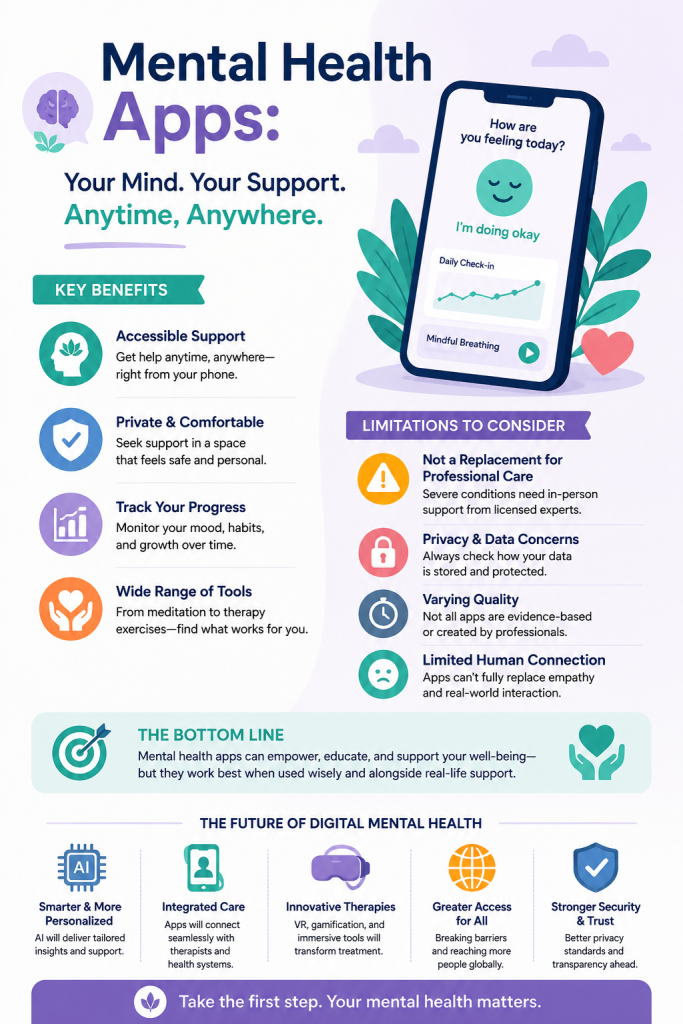
Despite their growing popularity and numerous benefits, mental health apps are not perfect. While they can provide valuable support, they also come with limitations that users, healthcare professionals, and policymakers must understand.
Recognizing these challenges helps users make informed decisions and maintain realistic expectations about what a mental health app can and cannot do.
Mental Health Apps Cannot Fully Replace Human Therapists
One of the biggest misconceptions surrounding mental health apps is that they can completely replace professional therapy.
While many apps offer evidence-based techniques, guided exercises, and even AI-driven conversations, they lack essential aspects of human interaction.
A licensed therapist can:
- Interpret complex emotional experiences
- Identify underlying psychological issues
- Adjust treatment approaches dynamically
- Recognize crisis situations
- Provide empathy and human connection
Human relationships play a critical role in psychological healing. A digital platform, no matter how sophisticated, cannot fully replicate the depth of a therapeutic relationship.
For individuals experiencing severe mental health conditions, professional care remains essential.
Limited Effectiveness for Severe Mental Health Disorders
Mental health apps are often most effective for:
- Mild anxiety
- Everyday stress
- Burnout
- Emotional self-awareness
- General wellness support
However, individuals facing serious conditions such as:
- Major depressive disorder
- Bipolar disorder
- Schizophrenia
- Post-traumatic stress disorder (PTSD)
- Suicidal thoughts
typically require professional intervention beyond what a mental health app can provide.
Apps may complement treatment, but they should not be considered standalone solutions for severe psychiatric conditions.
User Engagement Challenges
Many users download a mental health app with good intentions but stop using it after a few days or weeks.
This phenomenon is common across health-related applications.
Reasons include:
- Loss of motivation
- Busy schedules
- Lack of immediate results
- Repetitive content
- Poor user experience
Research consistently shows that effectiveness depends heavily on consistent engagement.
Even the most advanced mental health app cannot deliver meaningful benefits if users abandon it shortly after installation.
One Size Does Not Fit All
Mental health is deeply personal.
What works well for one person may be ineffective for another.
For example:
- Some users respond positively to meditation.
- Others prefer journaling.
- Some benefit from CBT exercises.
- Others require interpersonal therapy.
Because mental health needs vary significantly, no single mental health app can adequately serve everyone.
Personalization is improving, but many applications still rely on generalized approaches.
Lack of Regulation in the Industry
The mental health app industry has expanded rapidly, often faster than regulatory frameworks.
Thousands of mental health apps are available today, yet only a small percentage have undergone rigorous scientific evaluation.
This creates several concerns:
- Unverified claims
- Inconsistent quality
- Lack of clinical oversight
- Potential misinformation
Some apps market themselves as therapeutic solutions without sufficient evidence supporting their effectiveness.
Users should carefully evaluate credibility before relying on any mental health app.
Privacy and Data Security Concerns
Privacy remains one of the most important issues in digital mental health.
Mental health apps often collect highly sensitive information, including:
- Mood patterns
- Anxiety levels
- Journal entries
- Therapy conversations
- Sleep data
- Behavioral information
This data can reveal intimate details about a person’s psychological state.
As a result, strong privacy protections are essential.
Why Mental Health Data Is Highly Sensitive
Mental health information differs from many other forms of personal data.
A user’s emotional history may reveal:
- Psychological vulnerabilities
- Medical conditions
- Trauma experiences
- Relationship challenges
- Workplace stressors
Unauthorized access to this information could have significant consequences.
Protecting mental health data should be a top priority for developers and healthcare organizations.
Potential Risks of Data Collection
Some mental health apps collect more information than users realize.
Potential concerns include:
- Third-party data sharing
- Targeted advertising
- Weak encryption
- Insufficient transparency
- Security breaches
Users often agree to lengthy privacy policies without fully understanding how their information may be used.
This creates ethical and legal challenges for the industry.
Questions Users Should Ask Before Downloading a Mental Health App
Before choosing a mental health app, users should consider:
Is the privacy policy transparent?
The app should clearly explain:
- What data is collected
- How data is stored
- Who can access information
- Whether information is shared
Is data encrypted?
Strong encryption helps protect sensitive information from unauthorized access.
Is the app developed with clinical oversight?
Professional involvement often improves both quality and trustworthiness.
Does the app have independent reviews or research support?
Evidence-based platforms generally offer more reliable experiences.
The Ethical Challenges of Digital Mental Health Solutions
As technology becomes more integrated into healthcare, ethical questions become increasingly important.
Mental health apps raise several unique ethical considerations.
Dependence on Technology
One concern is the possibility of users becoming overly dependent on digital support.
Some individuals may begin replacing real-world relationships with app interactions.
While technology can provide assistance, emotional well-being also depends on:
- Human connection
- Community support
- Family relationships
- Professional guidance
A healthy balance remains important.
Algorithmic Bias
AI-powered mental health apps rely on algorithms trained using large datasets.
If training data lacks diversity, the system may:
- Misinterpret certain experiences
- Provide less effective recommendations
- Reinforce existing biases
Ensuring fairness across different cultures, languages, age groups, and backgrounds remains a significant challenge.
Crisis Response Limitations
Mental health emergencies require immediate intervention.
Most mental health apps are not designed to manage:
- Active suicidal intent
- Psychiatric crises
- Severe psychological distress
Users experiencing emergencies need access to qualified healthcare professionals and emergency services.
Apps should clearly communicate these limitations.
AI and the Future of Mental Health Apps
Artificial intelligence is transforming nearly every industry, including mental healthcare.
AI-powered mental health apps are among the most exciting developments in digital wellness.
These systems use machine learning, natural language processing, and predictive analytics to deliver personalized support.
How AI Mental Health Apps Work
AI systems can analyze user interactions to identify:
- Mood patterns
- Stress indicators
- Behavioral changes
- Emotional triggers
Based on these insights, the app can recommend:
- Relaxation exercises
- Journaling prompts
- Mindfulness sessions
- Coping strategies
This creates a more adaptive user experience.
Advantages of AI-Powered Mental Health Apps
Personalized Support
AI can tailor recommendations based on individual behavior.
This creates a more relevant experience compared to generic self-help content.
Immediate Availability
Unlike traditional therapy, AI support is available around the clock.
Users can receive guidance whenever needed.
Scalability
Mental health professional shortages affect many regions worldwide.
AI solutions may help bridge service gaps by providing basic support to large populations.
Challenges of AI in Mental Healthcare
Despite its potential, AI has significant limitations.
Lack of Genuine Empathy
Artificial intelligence can simulate conversation but does not experience emotions.
Human empathy remains a unique aspect of therapeutic relationships.
Risk of Misinterpretation
Complex emotional experiences may be misunderstood by algorithms.
Incorrect interpretations could reduce effectiveness or cause frustration.
Ethical Concerns
Questions remain regarding:
- Accountability
- Transparency
- Data ownership
- Informed consent
Responsible development is essential.
Comparing Mental Health Apps and Traditional Therapy
Many people wonder whether they should use a mental health app or seek traditional therapy.
The answer often depends on individual circumstances.
Advantages of Mental Health Apps
Mental health apps provide:
- Lower costs
- Greater accessibility
- Flexible scheduling
- Privacy
- Immediate access
They are particularly useful for:
- Stress management
- Self-improvement
- Habit building
- Early intervention
Advantages of Traditional Therapy
Professional therapy offers:
- Clinical expertise
- Personalized diagnosis
- Crisis management
- Deep emotional exploration
- Human connection
Therapy remains the gold standard for treating many psychological disorders.
The Hybrid Model
Many experts believe the future lies in combining both approaches.
A hybrid model may include:
- Weekly therapy sessions
- Daily app-based exercises
- Mood tracking
- Progress monitoring
- Digital support between appointments
This combination can maximize effectiveness while improving accessibility.
Real-World Success Stories
Many users report meaningful improvements through mental health apps.
Common outcomes include:
- Reduced anxiety
- Better sleep
- Improved emotional awareness
- Enhanced resilience
- Stronger self-care habits
For example, a college student experiencing academic stress may use a mental health app for guided meditation and mood tracking.
Over time, they may identify stress triggers and develop healthier coping mechanisms.
Similarly, a busy professional struggling with burnout may benefit from daily mindfulness exercises that improve focus and emotional balance.
These examples demonstrate how digital tools can support positive behavioral change.
Mental Health Apps in Schools and Universities
Educational institutions increasingly recognize the importance of student mental health.
Mental health apps offer scalable support for large student populations.
Benefits include:
- Stress management resources
- Academic anxiety support
- Crisis awareness tools
- Emotional resilience training
- Self-help education
Students often prefer digital solutions because they are familiar, convenient, and less intimidating than traditional counseling.
Universities worldwide are integrating digital wellness platforms into student support services.
Mental Health Apps for Older Adults
While younger generations often dominate discussions about technology, mental health apps are becoming increasingly relevant for older adults.
Potential benefits include:
- Reducing loneliness
- Supporting emotional well-being
- Improving cognitive engagement
- Encouraging mindfulness practices
As user interfaces become more accessible, adoption among older populations is expected to increase significantly.
Mental Health Apps and Preventive Healthcare
One of the most promising aspects of digital mental health is prevention.
Rather than waiting for mental health conditions to become severe, users can engage in proactive self-care.
Preventive strategies include:
- Daily mood monitoring
- Stress reduction exercises
- Sleep optimization
- Mindfulness training
- Emotional awareness practices
Preventive care may reduce the long-term burden of mental health disorders and improve overall quality of life.
The Future of Mental Health Apps: What Comes Next?
The digital mental health industry is evolving at an extraordinary pace. What began as simple meditation timers and mood journals has transformed into sophisticated platforms powered by artificial intelligence, wearable technology, predictive analytics, and virtual therapy tools.
As mental healthcare systems worldwide struggle to meet growing demand, mental health apps are positioned to play an increasingly important role in prevention, support, monitoring, and treatment.
The next decade may fundamentally reshape how people manage emotional well-being.
Emerging Trends Shaping the Future of Mental Health Apps
Several technological advancements are expected to influence the future effectiveness of mental health apps.
These innovations could improve personalization, accessibility, and clinical outcomes while addressing many of the limitations seen in current platforms.
Hyper-Personalized Mental Health Experiences
Today’s mental health apps often provide generalized recommendations.
Future platforms are expected to become significantly more personalized.
Instead of offering the same meditation session or coping strategy to every user, advanced systems may analyze:
- Daily mood patterns
- Sleep quality
- Physical activity levels
- Stress indicators
- Social behavior
- Personal preferences
This information can help create individualized mental wellness plans.
Personalization may increase engagement, improve outcomes, and make digital mental health support feel more relevant.
Predictive Mental Health Monitoring
One of the most exciting developments involves predictive mental healthcare.
Future mental health apps may identify warning signs before users recognize them themselves.
Using behavioral data and machine learning, apps could detect:
- Increased stress levels
- Early depressive symptoms
- Burnout risks
- Anxiety escalation
- Sleep deterioration
This proactive approach could allow early intervention before symptoms become severe.
Rather than reacting to mental health crises, future technologies may help prevent them.
Mental Health Apps and Wearable Technology
Wearable devices are becoming increasingly sophisticated.
Smartwatches, fitness trackers, and health-monitoring devices now collect vast amounts of physiological data.
This creates powerful opportunities for mental health apps.
How Wearables Enhance Mental Health Tracking
Wearables can monitor:
- Heart rate variability
- Sleep quality
- Physical activity
- Breathing patterns
- Stress responses
When integrated with a mental health app, this information provides deeper insights into emotional well-being.
For example:
A user may report feeling anxious while wearable data simultaneously shows elevated heart rate and poor sleep quality.
The app can then recommend targeted interventions based on both subjective and objective information.
Real-Time Stress Detection
Future mental health apps may automatically detect stress in real time.
Imagine receiving a notification saying:
“Your heart rate and breathing patterns suggest elevated stress levels. Would you like to complete a two-minute breathing exercise?”
This type of immediate intervention could significantly improve emotional regulation.
Virtual Reality and Mental Health Apps
Virtual reality (VR) is rapidly emerging as a powerful mental healthcare tool.
Although still developing, VR technology has shown promise in multiple psychological applications.
Virtual Reality Therapy
VR environments can simulate situations that help individuals:
- Confront fears
- Practice coping strategies
- Reduce anxiety
- Improve social confidence
Exposure therapy, often used to treat phobias and anxiety disorders, may become more accessible through VR-enabled mental health apps.
For example:
Someone with a fear of public speaking could practice presentations in a virtual environment before facing real-world situations.
Immersive Meditation Experiences
Future mental health apps may move beyond audio-based meditation.
Users might enter calming virtual environments such as:
- Forests
- Beaches
- Mountains
- Gardens
- Space landscapes
These immersive experiences could enhance relaxation and mindfulness practice.
Augmented Reality and Emotional Wellness
Augmented reality (AR) overlays digital information onto the physical world.
Although less discussed than VR, AR may have significant mental health applications.
Potential uses include:
- Guided breathing exercises
- Mindfulness prompts
- Stress reduction activities
- Positive affirmations
- Emotional awareness exercises
AR could integrate mental wellness support into everyday environments without requiring complete immersion.
Digital Biomarkers and Mental Health Apps
Digital biomarkers represent one of the most promising areas of future development.
A digital biomarker is measurable behavioral or physiological data that can indicate health status.
For mental health apps, digital biomarkers may include:
- Typing speed
- Speech patterns
- Sleep changes
- Activity levels
- Communication frequency
- Smartphone usage behavior
These subtle indicators can provide valuable insights into mental health trends.
Early Detection Through Behavioral Data
Researchers increasingly believe that behavioral patterns may reveal mental health changes before symptoms become obvious.
For example:
A person experiencing depression may show:
- Reduced communication
- Lower activity levels
- Irregular sleep habits
- Decreased smartphone interaction
Future mental health apps could recognize these patterns and suggest appropriate interventions.
The Role of Artificial Intelligence in Future Mental Healthcare
Artificial intelligence is expected to become the foundation of next-generation mental health apps.
Future AI systems may become significantly more sophisticated than today’s chatbot-based solutions.
Emotion Recognition Technology
Advanced AI systems may eventually identify emotions through:
- Voice tone
- Facial expressions
- Word choice
- Behavioral patterns
This could enable more accurate emotional assessments and personalized recommendations.
For example:
If the app detects signs of frustration, it may recommend:
- Breathing exercises
- Cognitive reframing techniques
- Guided meditation
- Stress management tools
The goal is to deliver support at precisely the right moment.
AI-Assisted Therapy
Rather than replacing therapists, AI may support them.
Future mental health apps could help clinicians by:
- Tracking patient progress
- Identifying symptom trends
- Monitoring treatment adherence
- Providing session summaries
This may improve treatment efficiency while allowing therapists to focus on deeper clinical work.
Mental Health Apps and Global Accessibility
One of the greatest strengths of digital mental health solutions is scalability.
Millions of people worldwide lack access to mental healthcare services.
Common barriers include:
- Geographic isolation
- Financial limitations
- Provider shortages
- Social stigma
Mental health apps can help address these challenges.
Expanding Mental Healthcare in Underserved Regions
Many rural and underserved communities struggle to access licensed mental health professionals.
A mental health app can provide:
- Self-help resources
- Educational materials
- Emotional support tools
- Wellness tracking
While not a complete replacement for professional care, digital solutions can significantly improve access.
Multilingual Mental Health Support
Future mental health apps are expected to support more languages and cultural contexts.
This may reduce barriers for:
- Non-English speakers
- Immigrant communities
- International users
Culturally adapted content can improve effectiveness and engagement.
Mental Health Apps in the Workplace of the Future
Employee well-being has become a strategic priority for organizations worldwide.
The future workplace is likely to incorporate mental health apps more deeply into employee wellness programs.
Burnout Prevention
Burnout has become a major concern across industries.
Future mental health apps may identify burnout risk factors through:
- Workload analysis
- Stress monitoring
- Sleep tracking
- Mood assessments
Early intervention may help employees maintain productivity and well-being.
Employee Wellness Ecosystems
Organizations may integrate mental health apps with:
- Fitness programs
- Healthcare benefits
- Employee assistance programs
- Productivity platforms
This creates a holistic approach to workplace wellness.
Mental Health Apps for Children and Adolescents
Young people face unique mental health challenges.
These include:
- Academic pressure
- Social media influence
- Peer relationships
- Identity development
Future mental health apps may be specifically designed for younger users.
Age-Appropriate Mental Health Education
Child-focused mental health apps can teach:
- Emotional awareness
- Stress management
- Resilience
- Healthy coping strategies
Interactive formats may increase engagement and learning.
Supporting Parents and Caregivers
Many future platforms may include resources for parents.
These features could help families:
- Monitor emotional well-being
- Identify warning signs
- Encourage healthy habits
- Access professional resources
Family involvement often improves outcomes for young users.
Challenges the Industry Must Overcome
Despite tremendous potential, several obstacles remain.
The future success of mental health apps depends on addressing these challenges.
Clinical Validation
Many apps still lack strong scientific evidence.
Future growth requires:
- Rigorous research
- Independent evaluations
- Clinical trials
- Transparent reporting
Evidence-based development will increase credibility.
Privacy Protection
As apps collect more personal data, privacy becomes even more important.
Future mental health apps must prioritize:
- Secure storage
- Data encryption
- User consent
- Transparency
Trust is essential for adoption.
Ethical AI Development
AI systems must be developed responsibly.
Key priorities include:
- Fairness
- Accountability
- Transparency
- Human oversight
Ethical frameworks will become increasingly important as AI capabilities expand.
Best Practices for Choosing the Right Mental Health App
Not all mental health apps are created equal.
Users should evaluate options carefully.
Consider the following factors:
Evidence-Based Methods
Look for apps that use proven approaches such as:
- Cognitive Behavioral Therapy (CBT)
- Mindfulness-Based Stress Reduction
- Acceptance and Commitment Therapy (ACT)
Professional Involvement
Apps developed with mental health experts generally offer greater reliability.
Privacy Standards
Review privacy policies before sharing sensitive information.
User Reviews
Feedback from other users can provide valuable insights.
Clear Purpose
Choose an app that aligns with your goals, whether that involves:
- Anxiety management
- Sleep improvement
- Stress reduction
- Therapy access
- Mindfulness practice
The best mental health app is the one that meets your specific needs and encourages consistent use.
Mental Health Apps: A Long-Term Perspective
Mental health apps are unlikely to replace therapists, psychologists, psychiatrists, or traditional healthcare systems.
However, they are becoming an increasingly important component of modern mental healthcare.
Their greatest value may lie in:
- Prevention
- Early intervention
- Self-awareness
- Accessibility
- Ongoing support
As technology advances, mental health apps will likely become more intelligent, personalized, and effective.
The future of mental healthcare may not be exclusively digital or exclusively traditional.
Instead, it will likely combine the strengths of both worlds.
This hybrid approach has the potential to improve mental health outcomes for millions of people around the globe.
Frequently Asked Questions (FAQ)
1. What is a mental health app?
A mental health app is a digital application designed to support emotional well-being, stress management, anxiety reduction, mood tracking, meditation, therapy access, and other mental wellness activities through a smartphone, tablet, or computer.
2. Do mental health apps actually work?
Many mental health apps can be effective for managing mild to moderate stress, anxiety, and emotional challenges. Their effectiveness depends on factors such as user engagement, scientific foundation, personalization, and consistency of use.
3. Can a mental health app replace therapy?
No. A mental health app can support mental wellness and complement treatment, but it cannot fully replace licensed therapists, psychologists, or psychiatrists, particularly for severe mental health conditions.
4. Are mental health apps safe?
Most reputable mental health apps are generally safe when used appropriately. However, users should review privacy policies, data security practices, and clinical credibility before sharing sensitive information.
5. Which mental health conditions can apps help manage?
Mental health apps may assist with:
- Stress
- Anxiety
- Mild depression
- Burnout
- Sleep issues
- Emotional regulation
- Mindfulness
- Self-awareness
They are typically not intended as standalone treatment for severe psychiatric disorders.
6. Are free mental health apps effective?
Some free mental health apps offer valuable tools such as guided meditation, mood tracking, and journaling. However, premium versions often provide more personalized features, advanced analytics, and professional support.
7. How often should I use a mental health app?
Consistency matters more than duration.
Many experts recommend daily engagement, even if only for 5–15 minutes, to build healthy habits and maximize benefits.
8. Can mental health apps help with anxiety?
Yes. Many mental health apps include evidence-based strategies for anxiety management, including:
- Breathing exercises
- Cognitive Behavioral Therapy techniques
- Guided meditation
- Relaxation practices
Regular use may help reduce anxiety symptoms over time.
9. Can mental health apps help with depression?
Some mental health apps provide tools that may help manage depressive symptoms, such as mood tracking, gratitude exercises, behavioral activation, and CBT-based programs.
Individuals experiencing severe depression should seek professional care.
10. What features should I look for in a mental health app?
Important features include:
- Evidence-based techniques
- Mood tracking
- Goal setting
- Personalized recommendations
- Professional involvement
- Strong privacy protections
- User-friendly design
11. Are AI mental health apps effective?
AI-powered mental health apps can provide immediate support, emotional check-ins, and personalized recommendations. While promising, they should be viewed as supportive tools rather than replacements for professional mental healthcare.
12. Do mental health apps protect user privacy?
Privacy protections vary significantly between apps.
Users should evaluate:
- Data encryption
- Privacy policies
- Data-sharing practices
- Security measures
before selecting a platform.
13. Are mental health apps suitable for teenagers?
Many mental health apps offer age-appropriate tools for teenagers, helping them manage stress, academic pressure, emotional challenges, and self-care habits.
Parental guidance may be beneficial depending on age and circumstances.
14. Can mental health apps improve sleep?
Yes. Many mental health apps include:
- Sleep meditations
- Relaxation exercises
- Breathing techniques
- Sleep stories
These features may contribute to improved sleep quality and overall mental well-being.
15. Why are mental health apps becoming so popular?
Several factors contribute to their popularity:
- Convenience
- Accessibility
- Lower cost
- Reduced stigma
- Growing mental health awareness
- Increased smartphone usage
These advantages make support more readily available.
16. What are the biggest limitations of mental health apps?
Key limitations include:
- Limited crisis intervention capabilities
- Lack of human empathy
- User engagement challenges
- Variable quality
- Privacy concerns
- Limited effectiveness for severe disorders
Understanding these limitations helps set realistic expectations.
17. Can mental health apps support workplace wellness?
Yes. Many organizations now offer mental health apps as part of employee wellness programs to reduce stress, prevent burnout, and improve productivity.
18. Are mental health apps scientifically validated?
Some mental health apps are supported by clinical research, while others are not.
Users should prioritize apps developed using evidence-based approaches and backed by scientific studies whenever possible.
19. How do mood tracking features help?
Mood tracking helps users:
- Recognize emotional patterns
- Identify triggers
- Monitor progress
- Improve self-awareness
This information can also be useful during therapy sessions.
20. What is the future of mental health apps?
Future mental health apps are expected to incorporate:
- Artificial intelligence
- Predictive analytics
- Wearable device integration
- Virtual reality experiences
- Personalized treatment recommendations
These innovations may significantly improve effectiveness and accessibility.
Key Takeaways
After reviewing the benefits, limitations, scientific evidence, and future trends, several important conclusions emerge.
Mental health apps improve accessibility.
Millions of people can now access mental wellness tools regardless of location, income level, or scheduling constraints.
Mental health apps support prevention and self-care.
They encourage proactive mental health management through mindfulness, emotional awareness, and stress reduction practices.
Mental health apps work best when used consistently.
Regular engagement is one of the strongest predictors of positive outcomes.
Mental health apps are not replacements for professional treatment.
For serious mental health conditions, professional evaluation and therapy remain essential.
Technology and healthcare are becoming increasingly connected.
The future of mental healthcare will likely involve a combination of digital support tools and traditional therapeutic services.
Expert Perspectives on Digital Mental Health
Mental health professionals increasingly view digital mental health solutions as valuable tools within a broader care ecosystem.
Experts generally agree that mental health apps offer several advantages:
- Increased reach
- Greater accessibility
- Early intervention opportunities
- Enhanced patient engagement
However, most professionals emphasize that technology should complement—not replace—human care.
The strongest outcomes often occur when digital tools support existing treatment plans.
This integrated model allows individuals to benefit from both technological convenience and professional expertise.
Why Mental Health Matters More Than Ever
Mental health affects every aspect of life.
It influences:
- Relationships
- Physical health
- Career performance
- Academic achievement
- Financial decision-making
- Overall quality of life
Yet mental health challenges remain widespread across all age groups and demographics.
As societies become increasingly digital, technology has the potential to play a meaningful role in improving emotional well-being on a global scale.
Mental health apps represent one step toward making support more accessible, affordable, and proactive.
Final Verdict: Are Mental Health Apps Really Effective?
The answer is neither a simple yes nor a simple no.
Mental health apps can be highly effective for many people when used appropriately.
They offer:
- Convenient access to support
- Evidence-based self-help tools
- Emotional awareness resources
- Stress management techniques
- Personalized wellness experiences
For individuals experiencing everyday stress, mild anxiety, burnout, or a desire to improve emotional well-being, a mental health app may provide meaningful benefits.
However, effectiveness depends on several factors:
- App quality
- Scientific credibility
- Consistent use
- User motivation
- Severity of symptoms
Mental health apps are not miracle solutions.
They cannot replace licensed therapists, crisis intervention services, or comprehensive psychiatric care.
Instead, their greatest value lies in empowering users to take a more active role in their mental wellness journey.
As artificial intelligence, wearable technology, predictive analytics, and virtual reality continue to evolve, the capabilities of mental health apps will likely expand dramatically.
The future of mental healthcare is unlikely to be entirely digital or entirely traditional.
Rather, it will be a collaborative ecosystem where technology enhances human care, expands access, and helps millions of people achieve better emotional well-being.
For many individuals, the most effective mental health strategy may involve combining professional guidance, healthy lifestyle habits, strong social connections, and the smart use of digital mental health tools.
Mental health apps are not the complete answer to mental wellness—but they are becoming an increasingly important part of the solution.
Conclusion
Mental health apps have transformed the way people access emotional support and wellness resources. From mindfulness and mood tracking to AI-powered coaching and virtual therapy, these digital tools offer unprecedented convenience and accessibility.
While challenges remain regarding privacy, engagement, scientific validation, and clinical limitations, the overall trajectory is promising. Mental health apps continue to evolve into more intelligent, personalized, and evidence-based platforms.
For users seeking greater self-awareness, stress management, and proactive mental wellness support, a high-quality mental health app can be a valuable addition to daily life.
The key is understanding both its strengths and limitations.
Used wisely, mental health apps can help bridge gaps in care, encourage healthy habits, and support long-term emotional well-being in an increasingly connected world.