Table of Contents
- Introduction
- Is Cancer Really Increasing Among Younger People?
- What Does “Early-Onset Cancer” Mean?
- Which Cancers Are Becoming More Common in Younger Adults?
- Why Is This Happening?
- Lifestyle Changes and Cancer Risk
- Obesity and Early-Onset Cancer
- Diet and Ultra-Processed Foods
- Physical Inactivity and Sedentary Lifestyle
- Alcohol Consumption and Cancer Risk
- Smoking, Tobacco and Cancer
- Environmental Pollution and Chemical Exposure
- The Possible Role of the Gut Microbiome
- Genetics and Family History
- Can Stress Cause Cancer?
- Sleep and Cancer Risk
- Infections and Cancer
- Why Cancer Can Develop Earlier Than Before
- Could Better Detection Be Part of the Explanation?
- Why Younger People Often Ignore Cancer Symptoms
- Common Warning Signs of Cancer in Younger Adults
- Colorectal Cancer: Symptoms Young Adults Should Know
- Breast Cancer: Warning Signs in Younger Women
- Testicular Cancer: Warning Signs in Young Men
- Skin Cancer and Changing Moles
- Persistent Cough and Other Respiratory Symptoms
- Unexplained Weight Loss and Fatigue
- When Should a Young Person See a Doctor?
- Can Cancer Be Prevented?
- Healthy Habits That May Lower Cancer Risk
- The Importance of Cancer Screening
- Understanding Your Family Cancer History
- Why Early Detection Matters
- Cancer Does Not Always Mean a Poor Outcome
- Common Myths About Cancer in Young People
- What Young Adults Can Do Today
- A Simple Cancer-Prevention Checklist
- Frequently Asked Questions
- Conclusion
Introduction
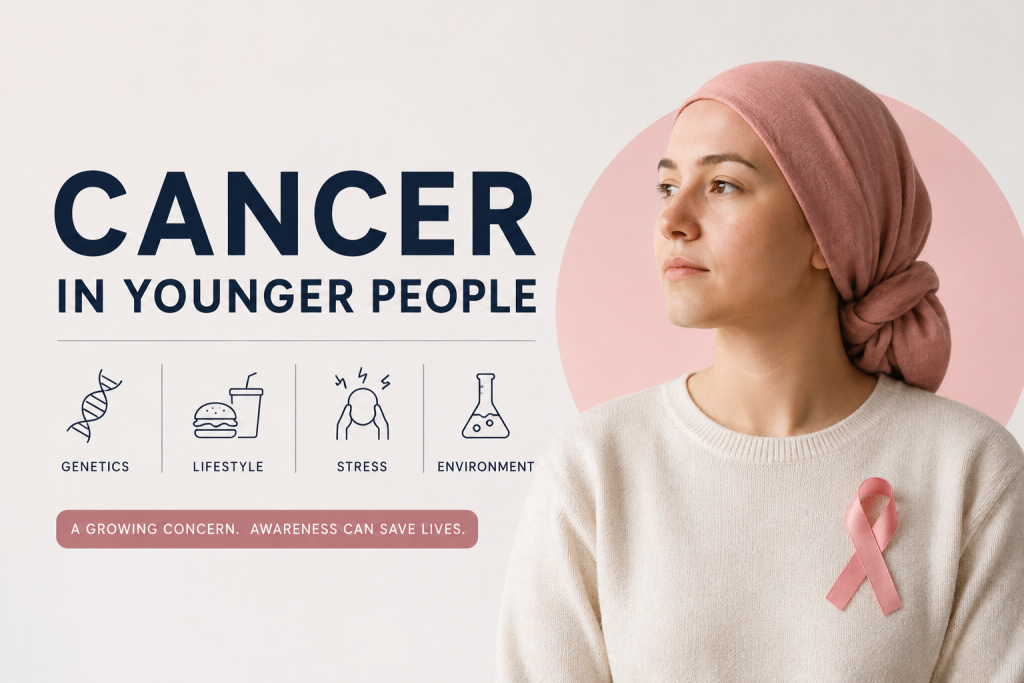
Cancer is often thought of as a disease of old age.
When people hear the word “cancer,” they may imagine someone in their 60s, 70s, or 80s. For decades, that image made sense because cancer risk generally increases with age. The National Cancer Institute explains that advancing age remains the most important overall risk factor for cancer.
But something has caught the attention of doctors and researchers in recent years.
Some types of cancer are being diagnosed more often in younger adults.
This does not mean that cancer has suddenly become a common disease among young people. Most cancers still occur in older adults. In fact, the overall cancer rate remains much higher in older age groups.
However, researchers have identified increases in certain cancers among people under 50. This has created an important question:
Why are some cancers appearing at younger ages?
The honest answer is that scientists do not yet have one simple explanation.
Instead, several possible factors are being investigated. These include changes in body weight, diet, physical activity, alcohol use, environmental exposures, infections, genetics, the gut microbiome, and other factors that may begin influencing health early in life.
It is also possible that improved diagnosis and greater awareness are contributing to some of the increase.
So this is not a story about one food, one habit, one chemical, or one modern technology “causing cancer.”
Cancer is complicated.
It usually develops through a combination of biological, genetic, environmental, and lifestyle factors. Different cancers also have different causes.
The good news is that learning about these factors can help us make better health decisions.
This article explains what researchers currently know about cancer in younger people, what remains uncertain, which warning signs should not be ignored, and what practical steps may help reduce cancer risk.
Is Cancer Really Increasing Among Younger People?
The short answer is:
For some cancer types, yes. But the picture is more complicated than a simple statement that “cancer is increasing in young people.”
A major 2025 analysis by researchers at the U.S. National Cancer Institute examined 33 types of cancer and looked at trends across different age groups.
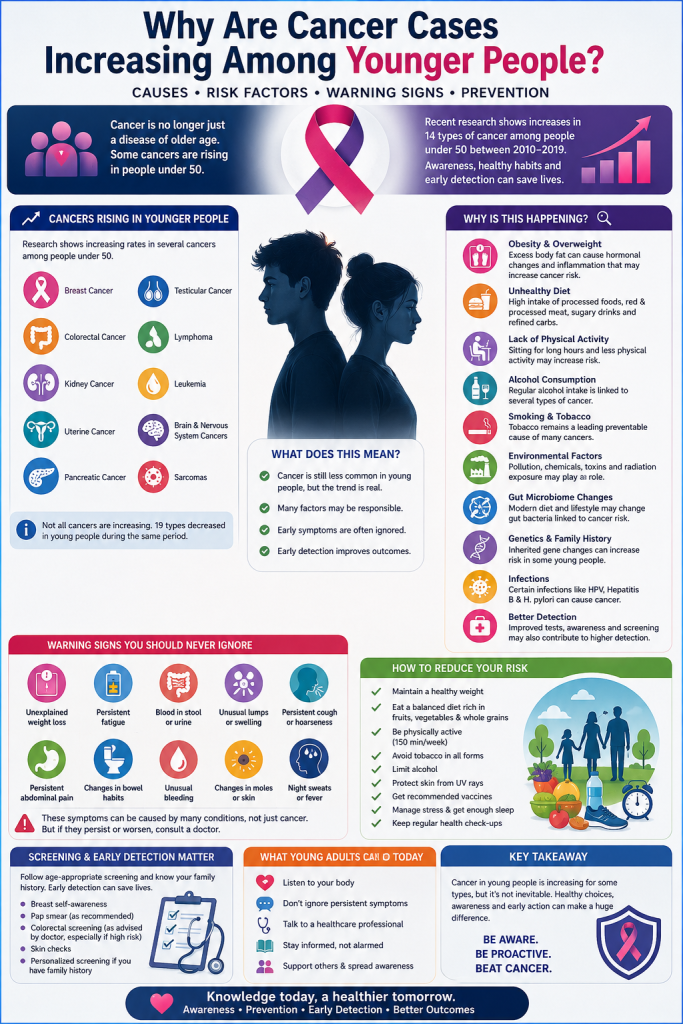
Researchers found that the incidence of 14 cancer types increased in at least one younger age group between 2010 and 2019.
The younger groups included people aged 15–29, 30–39, and 40–49.
However, 19 other cancer types decreased among younger people.
Importantly, the total rate of all cancers combined did not increase in younger people, and overall cancer death rates did not increase in those younger age groups.
This distinction is important.
It would be misleading to say:
“All cancers are increasing among young people.”
That is not what the evidence shows.
A more accurate statement is:
Certain cancers are becoming more common in younger people, and researchers are trying to understand why.
Among the cancers showing increases were breast, colorectal, kidney, uterine, pancreatic, testicular and several types of lymphoma.
At the same time, some cancers have been decreasing.
This means the trend is cancer-specific rather than a universal increase in every type of cancer.
What Does “Early-Onset Cancer” Mean?
You may have heard the term early-onset cancer.
Generally, researchers use this term to describe cancer diagnosed at a younger-than-usual age, often before age 50.
However, different studies may use slightly different age ranges.
For example, the NCI’s recent analysis examined cancer trends in people younger than 50 and divided them into younger age groups.
Another important group is adolescents and young adults, often called AYA, covering ages 15–39.
According to NCI data, an estimated 88,120 adolescents and young adults aged 15–39 may be diagnosed with cancer in the United States in 2026. Cancer in this age group represents about 4.2% of all new cancer cases.
The most common cancers among adolescents and young adults include:
- Breast cancer
- Thyroid cancer
- Testicular cancer
- Melanoma
- Colorectal cancer
- Lymphoma
- Leukemia
- Cervical cancer
- Brain and nervous system cancers
- Sarcomas
The important message is that cancer in younger people is still relatively uncommon compared with cancer in older adults.
But uncommon does not mean impossible.
Which Cancers Are Becoming More Common in Younger Adults?
Researchers have identified increases in several cancer types.
These include:
Breast cancer
Breast cancer is one of the cancers contributing substantially to the increase in early-onset cancer cases.
Colorectal cancer
Colorectal cancer has attracted particular attention because cases have been increasing among younger adults in several countries.
Researchers are especially interested in why people who would traditionally have been considered too young for colorectal cancer are developing the disease.
Kidney cancer
Kidney cancer has also shown increases in younger populations.
Uterine cancer
Some uterine cancers have increased among younger age groups.
Pancreatic cancer
Pancreatic cancer has shown concerning trends in some younger groups, although it remains much less common than breast or colorectal cancer.
Testicular cancer
Testicular cancer is particularly important when discussing younger men because it is one of the more common cancers in younger males.
The 2025 NCI analysis found increases in 14 cancer types in at least one younger age group, but the pattern varied considerably by cancer type and age.
This is why researchers caution against looking for one universal cause.
Why Is This Happening?
This is probably the biggest question.
And unfortunately, science does not yet have a complete answer.
Researchers are investigating several possibilities.
These include:
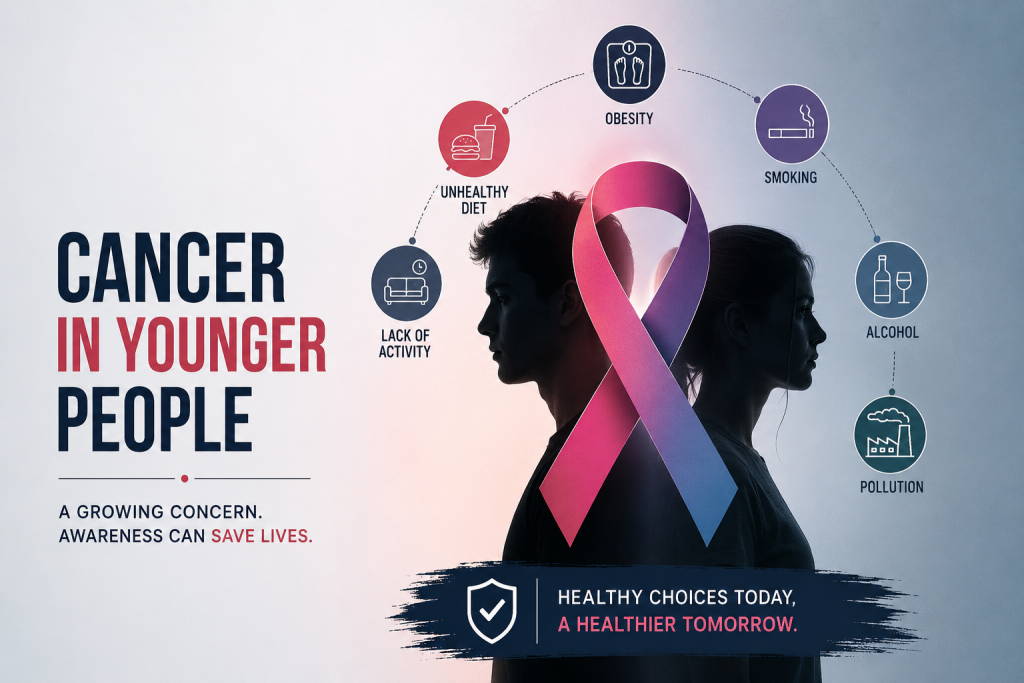
- Increasing overweight and obesity
- Changes in diet
- Reduced physical activity
- Alcohol consumption
- Tobacco exposure
- Environmental pollutants
- Changes in the gut microbiome
- Certain infections
- Genetic predisposition
- Family history
- Early-life exposures
- Hormonal and metabolic changes
- Improved diagnosis
- Changes in screening and surveillance
- Other factors that have not yet been identified
It is important to understand that these factors are not equally proven for every cancer.
For example, obesity is a well-established risk factor for several cancers, while other proposed explanations remain under investigation.
The NCI has emphasized that there is currently no single “smoking gun” explaining the rise in early-onset cancers.
That is one of the most important points to remember.
Lifestyle Changes and Cancer Risk
Modern lifestyles are very different from those of previous generations.
Many people now spend long hours sitting.
Meals are often eaten quickly.
Highly processed foods are widely available.
Physical activity may be limited.
Sleep schedules can be irregular.
Alcohol consumption is common in many populations.
At the same time, obesity has become more common globally.
These changes do not prove that modern lifestyles are directly responsible for the entire increase in early-onset cancer.
But they provide researchers with important areas to investigate.
Some lifestyle factors are already known to affect cancer risk.
Obesity and Early-Onset Cancer
One of the strongest areas of research is the relationship between excess body weight and cancer.
Obesity affects the body in many ways.
It can influence:
- Hormones
- Insulin levels
- Inflammation
- Immune function
- Metabolism
- Cell growth
These biological changes may create an environment that supports the development of certain cancers.
The NCI notes that excess body weight is associated with several cancers and that researchers are investigating its possible contribution to early-onset cancer.
A worldwide analysis discussed by NCI found that several obesity-related cancers increased among younger adults during the period studied, and increases in body weight were associated with increases in some cancers, including colon, rectal, pancreatic and kidney cancers.
But again, this does not mean:
“Obesity causes all cancer in young people.”
Cancer does not work that simply.
Rather, excess body weight may be one contributor among several.
Diet and Ultra-Processed Foods
Food is another major area of interest.
Modern diets can contain large amounts of:
- Sugary drinks
- Refined carbohydrates
- Processed meats
- Fried foods
- Packaged snacks
- Fast food
- Highly processed meals
- Excess calories
- Added sugars
- Excess sodium
A poor-quality diet can contribute to obesity and metabolic problems, which may indirectly affect cancer risk.
Some individual foods and dietary patterns also have more direct relationships with particular cancers.
For example, processed meat consumption is associated with increased colorectal cancer risk.
However, it is important not to turn nutrition into a list of “good foods” and “bad foods.”
Eating one burger does not cause cancer.
Eating one salad does not prevent cancer.
Health outcomes are influenced by patterns over time.
A balanced diet built around vegetables, fruits, whole grains, legumes, nuts, seeds and other minimally processed foods can support healthy body weight and overall health.
Physical Inactivity and Sedentary Lifestyle
Another major change in modern life is how much time people spend sitting.
Many jobs involve computers.
Students spend hours studying or using screens.
Entertainment often happens while sitting.
Cars and other forms of transportation reduce the amount of walking many people naturally do.
Physical inactivity can contribute to:
- Weight gain
- Poor cardiovascular health
- Insulin resistance
- Reduced fitness
- Metabolic problems
Regular physical activity is associated with lower risk of several cancers.
Exercise also helps maintain a healthy body weight and supports heart and mental health.
You do not necessarily need an expensive gym membership.
Walking, cycling, swimming, household activities, sports and strength training can all contribute to a more active lifestyle.
Alcohol Consumption and Cancer Risk
Alcohol is another established cancer risk factor.
Many people associate alcohol mainly with liver disease.
But alcohol can contribute to the risk of several cancers.
The relationship can depend on:
- Amount consumed
- Frequency
- Duration
- Individual biology
- Other lifestyle factors
For people concerned about cancer prevention, reducing or avoiding alcohol can be a meaningful risk-reduction strategy.
This is especially relevant when several risk factors occur together.
For example, alcohol consumption combined with tobacco exposure can substantially increase the risk of certain cancers.
Smoking, Tobacco and Cancer
Smoking remains one of the most important preventable causes of cancer.
Cigarette smoke contains numerous substances capable of damaging DNA.
Smoking is strongly linked with lung cancer and several other cancers.
Younger people may also be exposed to tobacco through:
- Cigarettes
- Cigars
- Shisha
- Smokeless tobacco
- Other tobacco products
In Pakistan and other South Asian countries, smokeless tobacco products are an important concern.
Products such as chewing tobacco and other forms of oral tobacco can expose users to cancer-causing substances.
The best time to stop tobacco use is as early as possible.
But quitting at any age can provide health benefits.
Environmental Pollution and Chemical Exposure
Another area of research involves environmental exposures.
People can encounter pollutants through:
- Air pollution
- Workplace chemicals
- Industrial emissions
- Household pollutants
- Contaminated water
- Certain occupational exposures
The challenge is that people are rarely exposed to one environmental factor at a time.
Instead, we experience a mixture of exposures throughout our lives.
Scientists are therefore investigating whether certain combinations of environmental exposures may contribute to early-onset cancer.
This is an active area of research.
It would be premature to claim that a particular chemical or pollutant is responsible for the overall rise in young-onset cancer without strong evidence.
The Possible Role of the Gut Microbiome
Your digestive system contains trillions of microorganisms.
Together, they are often referred to as the gut microbiome.
These microorganisms can influence:
- Digestion
- Immune function
- Metabolism
- Inflammation
- Production of certain biological compounds
Researchers are investigating whether changes in the microbiome may contribute to colorectal cancer and possibly other cancers.
Some studies have identified differences in gut bacteria between people with cancer and people without cancer.
Researchers are also studying specific bacterial strains and substances they produce.
However, this field is still developing.
We should be careful about internet claims suggesting that a particular probiotic, supplement or “detox” can prevent cancer.
There is currently no magic microbiome cure for cancer.
Genetics and Family History
Genetics absolutely matters in cancer.
Some people inherit genetic changes that increase their risk of developing particular cancers.
Examples include inherited changes involving:
- BRCA1
- BRCA2
- Lynch syndrome-associated genes
- Other cancer-predisposition genes
However, inherited genetics does not explain the entire increase in early-onset cancer.
Our genes do not change dramatically from one generation to another in just a few decades.
Researchers therefore suspect that environmental, lifestyle, developmental and other factors may also contribute.
The NCI reports that inherited cancer-related mutations can be particularly important in some younger patients, but researchers do not believe genetics alone explains the broader rise in early-onset cancers.
Can Stress Cause Cancer?
This is one of the most common questions.
The relationship between stress and cancer is complicated.
Having a stressful week does not mean you are going to develop cancer.
There is no good reason to blame yourself for cancer because you experienced stress.
However, chronic stress can influence behaviors and biological processes that affect overall health.
For example, people experiencing long-term stress may:
- Sleep poorly
- Smoke
- Drink more alcohol
- Eat poorly
- Exercise less
- Gain weight
Stress can also affect hormonal and immune pathways.
Researchers continue to study whether chronic stress directly contributes to cancer development.
For now, it is more useful to think of stress management as part of overall health rather than as a guaranteed cancer-prevention strategy.
Sleep and Cancer Risk
Sleep is another important part of healthy living.
Young adults often sacrifice sleep because of:
- Work
- Studies
- Social media
- Entertainment
- Shift work
- Family responsibilities
Poor sleep can affect:
- Mood
- Concentration
- Metabolism
- Appetite
- Immune function
- Blood pressure
Research into sleep and cancer is ongoing.
Some evidence suggests that disrupted circadian rhythms and certain types of long-term shift work may be associated with cancer risk.
But sleep should not be presented as a single explanation for rising cancer rates.
Instead, good sleep is one part of a healthy lifestyle that supports the body’s normal functions.
Infections and Cancer
Certain infections can increase cancer risk.
Examples include:
- Human papillomavirus (HPV)
- Hepatitis B virus
- Hepatitis C virus
- Helicobacter pylori
- Epstein-Barr virus
These infections can contribute to specific cancers through long-term biological effects.
The good news is that some infection-related cancers can be prevented.
For example, HPV vaccination can help prevent infections with HPV types that cause many cancers.
Hepatitis B vaccination can also help prevent hepatitis B infection and reduce the risk of liver cancer.
This is an important reminder:
Cancer prevention is not only about diet and exercise.
Vaccination, infection prevention and appropriate medical care matter too.
Why Cancer Can Develop Earlier Than Before
One interesting explanation being studied is the birth-cohort effect.
Imagine two generations.
One generation grows up during the 1950s and 1960s.
Another grows up during the 1980s, 1990s and 2000s.
Their childhood environments, food systems, physical activity patterns, body weights, exposures and lifestyles may be very different.
If certain exposures begin earlier in life, their effects may also appear earlier.
This could help explain why some cancers are appearing at younger ages.
Researchers studying early-onset colorectal cancer have considered whether people born in later decades may have experienced a “whole package” of changing environmental and lifestyle factors that could influence when cancer develops.
This does not prove that one generation is responsible.
It simply shows why researchers are looking at early-life exposures, not only what people do immediately before their cancer diagnosis.
Could Better Detection Be Part of the Explanation?
Yes.
This is an important part of the discussion.
When doctors become better at finding disease, diagnosis rates can increase.
For example:
- Better imaging
- Improved laboratory testing
- More genetic testing
- Greater awareness
- Increased surveillance
- Changes in screening recommendations
- Better medical records
can all affect how many cancers are detected.
The NCI specifically notes that changes in screening, imaging and surveillance may contribute to some observed increases in cancer diagnosis among younger people.
However, researchers do not believe better detection explains everything.
The patterns seen across multiple cancers and countries suggest that additional factors are likely involved.
This is why the question remains open.
Why Younger People Often Ignore Cancer Symptoms
One of the biggest challenges is perception.
Many young adults think:
“I’m too young to have cancer.”
That thought is understandable.
Cancer is less common in young adults than older adults.
But the problem comes when age becomes a reason to ignore persistent symptoms.
A person may experience:
- Blood in the stool
- Persistent abdominal pain
- An unexplained lump
- Unusual bleeding
- A persistent cough
- Unexplained weight loss
and assume it is something harmless.
Sometimes it is.
But sometimes it isn’t.
The NCI has highlighted concerns about delayed diagnosis in younger adults because symptoms may initially be dismissed by patients or healthcare professionals.
This does not mean every unusual symptom is cancer.
It means persistent or unexplained changes deserve appropriate medical evaluation.
Common Warning Signs of Cancer in Younger Adults
Cancer symptoms vary enormously depending on the type and location of the disease.
Some common warning signs can include:
1. Unexplained weight loss
Losing weight without changing diet or exercise deserves attention, particularly when the weight loss is significant or persistent.
2. Persistent fatigue
Everyone gets tired.
But unexplained fatigue that continues despite adequate sleep should not automatically be ignored.
3. Unusual lumps
A new lump or swelling should be evaluated, especially if it grows, persists or changes.
4. Unusual bleeding
Blood in stool, urine, vomit or unusual vaginal bleeding should be medically assessed.
5. Persistent pain
Pain that continues without a clear explanation deserves evaluation.
6. Persistent cough
A cough lasting longer than expected, especially with other symptoms, should be discussed with a healthcare professional.
7. Changes in bowel habits
Persistent diarrhea, constipation, narrowing of stools or a major change in bowel pattern can have many causes, but should be checked if it continues.
8. Changes in a mole
A mole that changes in size, shape, color or behavior deserves attention.
9. Difficulty swallowing
Persistent difficulty swallowing should not be ignored.
10. Persistent fever or night sweats
These symptoms can have many causes, including infections, but persistent unexplained symptoms warrant medical evaluation.
The key word is persistent.
Most of these symptoms are caused by conditions other than cancer.
The purpose of recognizing warning signs is not to create fear.
It is to encourage timely medical attention.
Colorectal Cancer: Symptoms Young Adults Should Know
Colorectal cancer deserves special attention because it has become one of the most discussed examples of early-onset cancer.
Warning signs may include:
- Rectal bleeding
- Blood in stool
- Persistent abdominal pain
- Persistent changes in bowel habits
- Diarrhea
- Constipation
- Unexplained iron-deficiency anemia
- Unexplained weight loss
- Persistent fatigue
Research cited by the NCI has identified rectal bleeding and abdominal pain as important symptoms associated with early-onset colorectal cancer, with diarrhea and iron-deficiency anemia also identified in research.
Having these symptoms does not mean you have cancer.
Hemorrhoids, infections, inflammatory bowel disease, food intolerance and many other conditions can produce similar symptoms.
But persistent symptoms should not simply be assumed to be harmless.
Breast Cancer: Warning Signs in Younger Women
Breast cancer can occur in younger women, although risk generally increases with age.
Possible warning signs include:
- A new breast lump
- Change in breast size or shape
- Skin changes
- Nipple changes
- Nipple discharge
- Persistent localized pain
- Swelling around the breast or underarm
Many breast lumps are benign.
Nevertheless, any new or unusual breast change should be discussed with a qualified healthcare professional.
Younger women should not assume that a breast change is automatically harmless because of age.
Testicular Cancer: Warning Signs in Young Men
Testicular cancer is particularly relevant to younger men.
Possible warning signs include:
- A lump in the testicle
- Enlargement
- Heaviness
- Swelling
- Persistent discomfort
- A change in the shape or feel of a testicle
A sudden severe testicular pain is an emergency and requires urgent medical assessment because testicular torsion is another potentially serious cause.
Do not try to diagnose yourself.
Skin Cancer and Changing Moles
Skin cancer can occur at younger ages.
People who spend substantial time in the sun should pay attention to changes in their skin.
Warning signs may include a mole or skin lesion that:
- Changes in size
- Changes in shape
- Changes in color
- Bleeds
- Itches persistently
- Develops an irregular border
- Looks significantly different from other moles
A simple rule is:
Know your skin and notice changes.
People with high sun exposure, fair skin, many moles, or a personal or family history of skin cancer may need more individualized advice from a healthcare professional.
Persistent Cough and Other Respiratory Symptoms
A cough is usually caused by something much less serious than cancer.
Common causes include:
- Viral infections
- Asthma
- Allergies
- Smoking
- Air pollution
- Acid reflux
However, a persistent unexplained cough, especially when accompanied by:
- Blood in sputum
- Chest pain
- Breathlessness
- Unexplained weight loss
should be evaluated.
Young age does not completely eliminate the possibility of serious disease.
Unexplained Weight Loss and Fatigue
Weight loss sounds attractive to many people.
But unintentional weight loss is different from healthy weight loss.
If someone loses a significant amount of weight without trying, it deserves attention.
Possible causes include:
- Thyroid disease
- Diabetes
- Digestive disorders
- Infections
- Mental health conditions
- Medication effects
- Cancer
Fatigue is similarly nonspecific.
Cancer is only one of many possible causes.
The important thing is to investigate persistent unexplained symptoms instead of trying to guess the diagnosis.
When Should a Young Person See a Doctor?
You do not need to panic every time you notice something unusual.
Instead, consider medical advice when a symptom:
- Persists
- Gets worse
- Keeps returning
- Has no obvious explanation
- Interferes with normal activities
- Is accompanied by other concerning symptoms
Seek urgent medical attention for severe or rapidly worsening symptoms.
A healthcare professional can decide whether testing is needed.
Sometimes the evaluation may be simple.
Other times it may involve:
- Blood tests
- Imaging
- Ultrasound
- Endoscopy
- Colonoscopy
- Biopsy
- Genetic testing
- Other specialized tests
The appropriate test depends entirely on the symptoms and clinical situation.
Can Cancer Be Prevented?
Not every cancer can be prevented.
Some cancers are strongly influenced by inherited genetics.
Others occur for reasons scientists do not yet fully understand.
But prevention can still make a meaningful difference.
Many cancer risk factors are modifiable.
That means we can change them.
Important strategies include:
- Avoiding tobacco
- Maintaining a healthy weight
- Being physically active
- Eating a balanced diet
- Limiting alcohol
- Protecting skin from excessive ultraviolet exposure
- Getting recommended vaccinations
- Managing certain infections
- Following appropriate screening recommendations
- Knowing your family history
- Seeking medical advice for persistent symptoms
Cancer prevention is not about achieving perfection.
It is about reducing avoidable risk.
Healthy Habits That May Lower Cancer Risk
Eat More Whole Foods
Build meals around foods such as:
- Vegetables
- Fruits
- Beans
- Lentils
- Whole grains
- Nuts
- Seeds
- Fish or other healthy protein sources
Reduce Highly Processed Foods
You do not need to completely eliminate every packaged food.
Instead, aim for a diet in which minimally processed foods make up most of your meals.
Maintain a Healthy Weight
If you are overweight, even modest improvements in weight and fitness can benefit overall health.
Avoid crash diets.
Focus on sustainable habits.
Stay Physically Active
Walking is a great place to start.
You can gradually add:
- Strength training
- Cycling
- Swimming
- Running
- Sports
- Household activity
Avoid Tobacco
If you use tobacco, quitting is one of the most valuable things you can do for your health.
Limit Alcohol
Less alcohol generally means less alcohol-related cancer risk.
Protect Your Skin
Use shade, protective clothing and sunscreen when appropriate, particularly during intense sun exposure.
Get Vaccinated
Vaccination against certain infections can reduce the risk of cancers associated with those infections.
Sleep Well
Aim for a regular, adequate sleep schedule.
Know Your Family History
Ask relatives about cancers that have occurred in the family and the ages at which they were diagnosed.
The Importance of Cancer Screening
Screening can detect certain cancers before symptoms develop.
But screening recommendations depend on:
- Age
- Sex
- Family history
- Personal medical history
- Genetic risk
- Country-specific guidelines
Younger does not automatically mean “no screening.”
People with strong family histories or inherited cancer-risk conditions may need earlier or more frequent screening.
At the same time, unnecessary screening can also cause harm through false-positive results, unnecessary procedures and anxiety.
Therefore:
Do not follow random screening schedules from social media.
Follow evidence-based recommendations from qualified healthcare professionals and recognized health authorities.
Understanding Your Family Cancer History
Your family history can provide important clues.
Ask:
- Which relatives had cancer?
- What type of cancer did they have?
- How old were they when diagnosed?
- Did multiple relatives have the same cancer?
- Did anyone develop cancer at an unusually young age?
- Were there multiple types of cancer in one person?
A strong family history does not mean you will definitely develop cancer.
It simply means that you may benefit from a more personalized risk assessment.
Genetic counseling or testing may be appropriate in some situations.
Why Early Detection Matters
One of the most important lessons from the rise of early-onset cancer is simple:
Do not let age automatically dismiss symptoms.
Early detection can make a major difference for many cancers.
When cancer is found before it has spread extensively, treatment may be easier and outcomes may be better.
This is why awareness matters.
But awareness should not become fear.
The goal is not to constantly search your body for signs of cancer.
The goal is to know what is normal for you and seek appropriate care when something unusual persists.
Cancer Does Not Always Mean a Poor Outcome
Hearing the word “cancer” can be terrifying.
But cancer treatment has changed enormously.
Treatment may include:
- Surgery
- Radiation therapy
- Chemotherapy
- Immunotherapy
- Targeted therapy
- Hormone therapy
- Precision medicine
- Combination treatments
For many cancers, survival has improved significantly over time.
For adolescents and young adults, current NCI statistics estimate an overall five-year relative survival of about 86%, although survival varies greatly depending on cancer type, stage and individual circumstances.
This is an important message for younger patients:
Cancer is serious, but a cancer diagnosis does not automatically mean the end of life.
Common Myths About Cancer in Young People
Myth 1: “Young people don’t get cancer.”
False.
Cancer is less common among young people but can occur at any age.
Myth 2: “If I live a healthy lifestyle, I cannot get cancer.”
False.
Healthy habits can reduce risk but cannot eliminate it completely.
Myth 3: “Cancer is always caused by something you did.”
False.
Cancer is biologically complex.
Genetics, random cellular changes, environmental factors, infections and lifestyle factors can all contribute.
Myth 4: “Every lump is cancer.”
False.
Many lumps are benign.
But a persistent or concerning lump should be evaluated.
Myth 5: “Cancer symptoms are always obvious.”
False.
Some cancers produce subtle symptoms, especially early in the disease.
Myth 6: “A healthy person cannot have cancer.”
False.
Cancer can occur in people who appear extremely healthy.
Myth 7: “Sugar directly feeds cancer, so eliminating sugar cures cancer.”
This is an oversimplification.
Cancer cells use glucose, but so do normal cells.
Removing sugar from your diet does not selectively starve cancer cells.
Cancer treatment should never be replaced with a “no sugar” diet.
Myth 8: “Cancer is always hereditary.”
False.
Some cancers have inherited genetic components, but most cancers are not simply inherited from parents.
What Young Adults Can Do Today
You do not need to completely change your life overnight.
Start with small steps.
Step 1: Stop tobacco use
If you smoke or use tobacco, consider getting professional support to quit.
Step 2: Move more
Start with a daily walk.
Step 3: Improve your diet
Add more vegetables, fruits, legumes and whole foods.
Step 4: Watch your weight
Focus on healthy habits rather than extreme dieting.
Step 5: Limit alcohol
Reducing consumption can reduce health risks.
Step 6: Protect yourself from excessive sunlight
Especially if you spend long periods outdoors.
Step 7: Keep vaccinations up to date
Discuss recommended vaccines with a healthcare professional.
Step 8: Know your family history
Your family story can help doctors understand your risk.
Step 9: Do not ignore persistent symptoms
If something does not seem right and does not improve, get it checked.
Step 10: Avoid health misinformation
Do not rely on TikTok, Facebook, YouTube or random websites for a cancer diagnosis.
Use reliable medical sources and qualified healthcare professionals.
A Simple Cancer-Prevention Checklist
Before worrying about cancer, focus on the things you can control.
- Avoid tobacco.
- Maintain a healthy body weight.
- Stay physically active.
- Eat plenty of vegetables and fruits.
- Include fiber-rich foods in your diet.
- Limit highly processed foods.
- Limit alcohol.
- Protect your skin from excessive UV exposure.
- Follow recommended vaccinations.
- Know your family cancer history.
- Follow appropriate screening recommendations.
- Pay attention to persistent changes in your body.
- Seek professional medical advice when necessary.
- Avoid unproven cancer cures.
Frequently Asked Questions
1. Are cancer cases really increasing in young people?
Some cancer types are increasing among younger people, but not all cancers. A 2025 NCI analysis found increases in 14 cancer types in at least one younger age group between 2010 and 2019, while 19 cancer types decreased among younger people.
2. What age is considered young for cancer?
There is no single universal definition. Early-onset cancer is commonly discussed as cancer diagnosed before age 50. Adolescents and young adults are often defined as ages 15–39.
3. What cancer is increasing most among young people?
There is no single cancer responsible for the entire trend. Colorectal cancer has received considerable attention, but increases have also been reported for cancers including breast, kidney, uterine, pancreatic, testicular and some lymphomas.
4. Is obesity linked to cancer?
Yes. Excess body weight is associated with increased risk of several cancers, and researchers are investigating its role in the rise of early-onset cancers.
5. Can healthy eating prevent cancer?
A healthy diet can help reduce certain cancer risks and support a healthy weight, but no diet can guarantee that a person will never develop cancer.
6. Can stress cause cancer?
The relationship between stress and cancer is complicated. Chronic stress can influence health behaviors and biological processes, but it is not accurate to say that ordinary stress directly causes cancer.
7. Can young people get colorectal cancer?
Yes. Although colorectal cancer is much more common in older adults, it can occur in younger adults and rates of early-onset colorectal cancer have increased in several populations.
8. Should young adults worry about every symptom?
No.
Most symptoms such as tiredness, abdominal pain or occasional digestive problems have causes other than cancer.
The important point is to seek medical advice when symptoms are persistent, unusual, worsening or unexplained.
9. Can cancer be prevented completely?
No.
However, many risk factors can be modified, and prevention strategies can reduce the risk of several cancers.
10. Does family history mean I will get cancer?
No.
A family history can increase risk for certain cancers, but it does not mean cancer is inevitable.
11. Can exercise reduce cancer risk?
Regular physical activity is associated with a lower risk of several cancers and provides many other health benefits.
12. Why are researchers still unsure about the cause?
Cancer is not one disease.
Different cancers have different biological pathways and risk factors. The recent increase in some early-onset cancers likely reflects several factors rather than one universal cause.
Conclusion
The question “Why are cancer cases increasing among younger people?” does not have one simple answer.
And that is perhaps the most important thing to understand.
Research has clearly shown that some cancers are being diagnosed more frequently among younger adults. At the same time, cancer overall remains much more common with increasing age, and not every cancer is following the same pattern.
Scientists are investigating a wide range of possible explanations.
Changes in body weight, diet, physical activity, alcohol use, tobacco exposure, infections, environmental factors, genetics, early-life exposures and changes in diagnosis may all play roles in particular cancers.
But researchers have not identified one universal cause.
This uncertainty should not lead to panic.
Instead, it should encourage awareness.
Young adults should not assume they are completely protected from serious disease simply because they are young. Persistent bleeding, unexplained weight loss, unusual lumps, lasting changes in bowel habits, persistent pain or other concerning symptoms deserve appropriate medical attention.
At the same time, people should not become frightened by every headache, stomachache or episode of tiredness.
Awareness is not the same as fear.
The practical approach is to focus on what can be controlled:
Eat a balanced diet.
Stay active.
Maintain a healthy weight.
Avoid tobacco.
Limit alcohol.
Protect your skin.
Keep recommended vaccinations up to date.
Know your family history.
Follow appropriate screening guidance.
And most importantly, do not ignore persistent changes in your body.
The rise of early-onset cancer is still an important scientific puzzle. Researchers around the world are working to understand what is driving these trends and how prevention and early detection can be improved.
For now, the best approach is neither panic nor denial.
It is knowledge, prevention, healthy living and timely medical care.
Being young lowers your overall cancer risk—but it does not make you immune.
Medical Disclaimer
This article is intended for general educational purposes and should not be used to diagnose, treat or prevent cancer in an individual. Cancer symptoms can have many causes, and having one of the symptoms discussed above does not mean that a person has cancer. If you have persistent, unexplained or concerning symptoms, speak with a qualified healthcare professional. Screening recommendations vary according to age, sex, family history, personal risk and local guidelines.